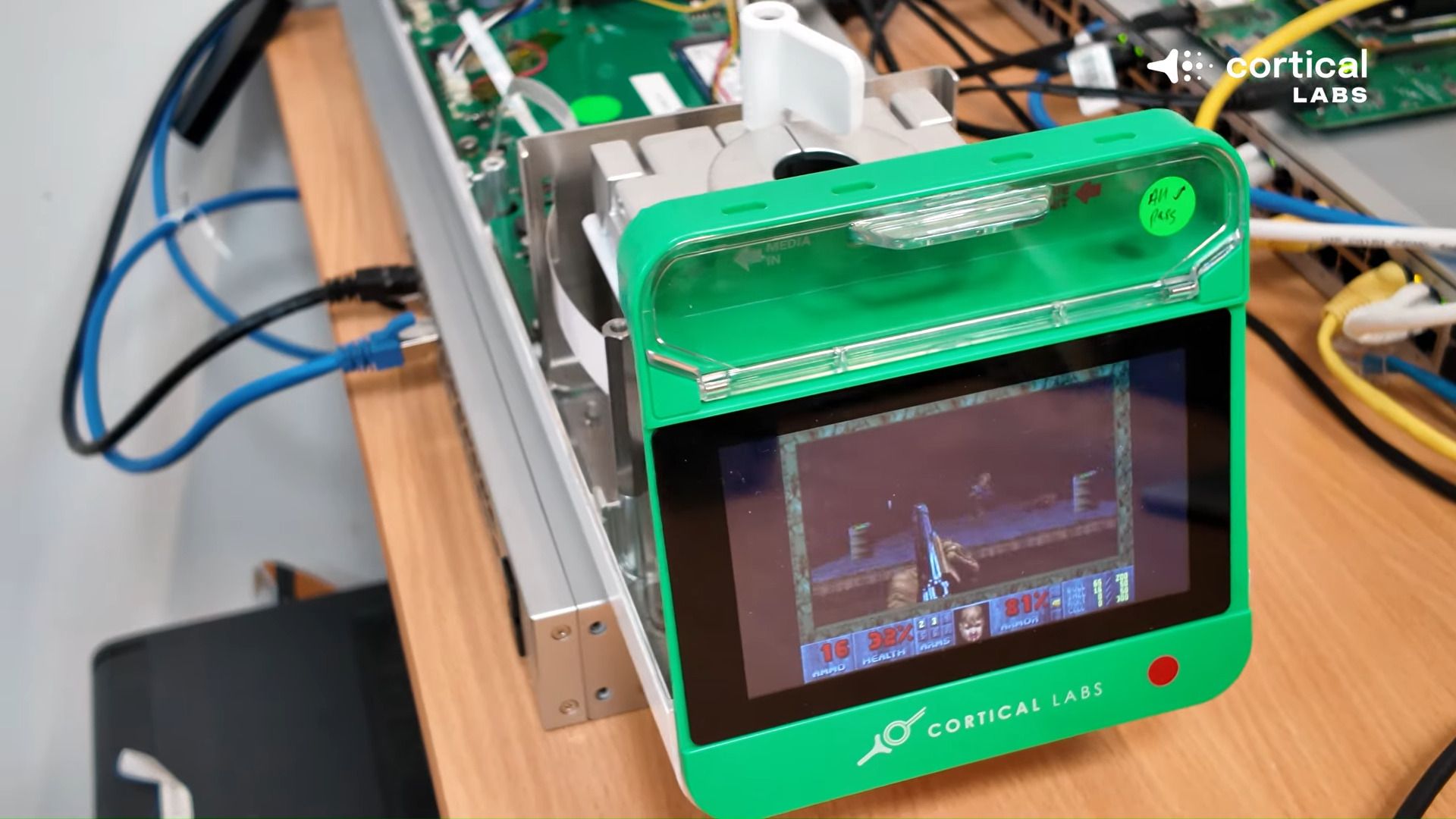
Cortical Labs demonstrated its CL1 'body in a box' biological computer using roughly 200,000 living human neurons on a microchip to play Doom, showcasing adaptive real-time goal-directed learning and claiming it has solved the real-time interface for interacting with cultured neurons. The demo, which follows an earlier Pong experiment, leverages a Cortical Labs API and a proposed 'Cortical Cloud' for training more complex tasks, and the company has previously positioned CL1 as a commercially shippable, code-deployable biological computer. For investors, the event validates a notable technical milestone at the intersection of neurobiology and compute but remains an early-stage, experimental capability with limited near-term commercial or market-moving implications.
Market structure: The immediate winners are life‑science tools and consumables suppliers (Thermo Fisher TMO, Danaher DHR) and cloud/GPU providers (NVDA, AMZN, MSFT) that plug into a “Cortical Cloud” training model; demand signal is niche today but scalable to recurring reagent and instrument spend if commercialized. Direct consumer gaming or mainstream silicon incumbents are largely unaffected — this is additive to existing compute markets, not a substitution, so pricing power shifts modestly toward specialized wet‑lab suppliers and integrated platform providers.
Risk assessment: Tail risks include regulatory/ethical clampdowns (moratoria on human‑neuron computing), lab contamination/liability, or failure to scale biologics throughput; any of these could wipe out valuations of speculative entrants. Near term (days–weeks) expect PR‑driven volatility; short term (3–12 months) look for partnership announcements or peer‑reviewed validation; long term (2–5 years) depends on reproducible, cost‑effective manufacturing and clear regulation.
Trade implications: Favor durable, cash‑flowing tools/platform companies (TMO, DHR) and modest exposure to GPU/cloud (NVDA) using capped option structures to limit cash outlay; avoid direct exposure to private/small public neurotech hype. Use pair trades to rotate from speculative genomics/AI biotech (ARKG) into industrial life‑science suppliers, and size positions small (1–4% each) until independent validation arrives.
Contrarian angles: The consensus overweights headline novelty and underestimates fragility and scale challenges — 200k neurons is orders of magnitude below human scale, so monetization likely multi‑year. Historical parallel: early quantum and CRISPR demos produced years of hype before durable revenues; unintended consequences (rapid regulatory tightening or ethical litigation) could make speculative plays extremely binary.
AI-powered research, real-time alerts, and portfolio analytics for institutional investors.
Request TrialOverall Sentiment
mildly positive
Sentiment Score
0.25
