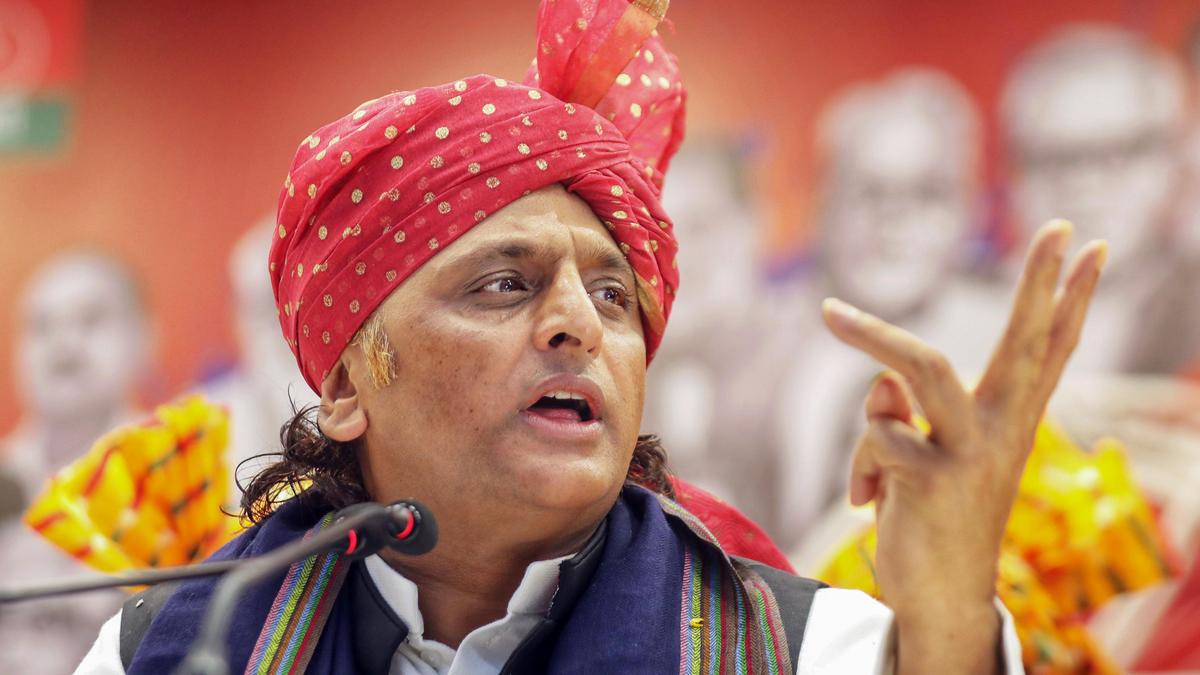
Akhilesh Yadav accused the BJP government of mishandling the economy and foreign policy after Prime Minister Modi urged austerity measures, including reduced fuel use, postponed gold purchases, and less foreign travel, to cushion the West Asia conflict's impact. The article highlights concerns over a weakening rupee, inflation, unemployment, and possible market anxiety from tighter consumption guidance. Modi framed the measures as a foreign-exchange saving and self-reliance push, but the political backlash underscores policy uncertainty.
The market implication is less about the political crossfire and more about the signal the government is sending: policymakers are implicitly prioritizing external-account defense over near-term growth optics. That tends to be mildly supportive for INR stability and the current account over a 1-3 month horizon, but it is a headwind for domestic discretionary demand, travel, and premium import baskets if households and corporates internalize the message as a prelude to tighter consumption conditions.
The second-order effect is on sentiment-sensitive segments rather than the broad index. Gold demand can become front-loaded in anticipation of social pressure against conspicuous purchases, but import restrictions or softer sentiment would more likely show up as margin pressure for jewelry retailers before volume destruction becomes visible. At the same time, any policy push toward fuel thrift, EV adoption, rail freight, and work-from-home is marginally positive for domestic platform businesses and negative for airlines, luxury retail, and high-end autos in the next quarter.
The bigger risk is that this becomes a self-fulfilling confidence shock: when officials publicly frame conservation as necessary, markets start pricing slower consumption and higher policy uncertainty. That usually widens valuation discounts for cyclicals and small caps before it appears in hard data, especially if FX weakness persists. The key reversal catalyst would be a durable de-escalation in West Asia plus a stable rupee; without that, the government will have little choice but to keep leaning on austerity messaging, which keeps the sentiment overhang intact for months.
Contrarian angle: the selloff risk may be overstated if investors are already heavily underweight India domestic beta. In that case, the better trade is not a broad India short but a targeted rotation away from import-intensive, consumption-exposed names into beneficiaries of policy nudges around efficiency, digitization, and rail/logistics.
AI-powered research, real-time alerts, and portfolio analytics for institutional investors.
Request DemoOverall Sentiment
moderately negative
Sentiment Score
-0.40
