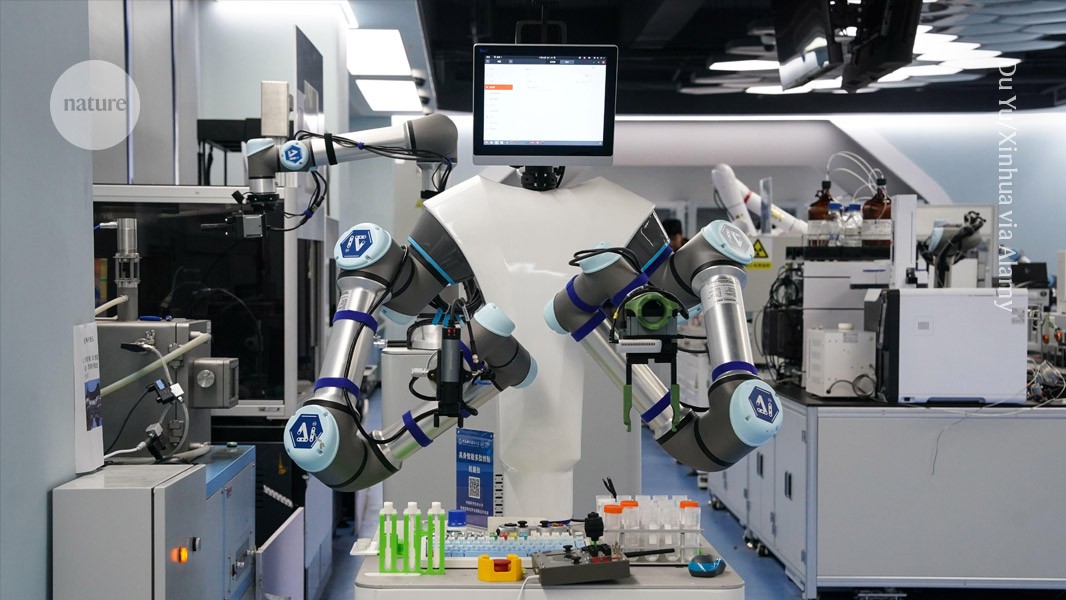
An OpenAI–Ginkgo autonomous-lab system using GPT-5 directed robotics to optimize cell-free protein synthesis, testing >30,000 experimental conditions over six months and achieving a ~40% additional cost reduction relative to a human-developed recipe (the prior human effort tested 1,231 combinations over four months and produced a formula at least six-times cheaper than legacy recipes). GPT-5 iteratively designed experiments, accessed a preprint and internet literature, and kept a lab notebook, but the study notes persistent limitations in robotic dexterity and AI capacity for bespoke or complex biological experiments, so human expertise and oversight remain essential. The result signals potential for faster, lower-cost protein R&D—positive for firms in biotech automation and AI-enabled lab services—but near-term commercial impact and broad adoption are constrained by technical and practical limitations.
Market structure: Autonomous-lab advances (GPT-5 + robotics) are a win for platform players that combine software, automation and reagent supply — think Ginkgo (DNA) and Thermo Fisher (TMO) — because unit cost of routine assays can fall ~40%–60% for cell-free protein tasks, compressing margins for incumbent manual service providers. Small, labor‑heavy CROs and contract wet‑lab providers face downward pricing pressure on low-complexity work but high-complexity assays (animals, tissue) remain human‑dependent, preserving a two‑tier market.
Risk assessment: Tail risks include biosecurity/regulatory clampdowns (ban/restrictions on autonomous experiments) and operational errors or supply‑chain reagent shortages; probability moderate but impact high — loss of >50% revenue for pure-play automation firms within 6–12 months in worst case. Short horizon (days–weeks) implies elevated headline-driven volatility; medium (3–12 months) depends on adoption by top 10 pharma; long term (1–3 years) structural margin gains if automation scales beyond simple assays.
Trade implications: Direct actionable trades favor platform automation longs and defensive consumables exposure (DNA, TMO) and relative shorts in biotech-cap weighted exposure (IBB) or specific small CROs with >60% manual lab revenue. Options: use 9–12 month call spreads on DNA to cap premium; sell short-dated calls to fund longs if implied vol >30%. Rebalance on adoption signals (three pharma pilot announcements or peer‑reviewed replication within 3–6 months).
Contrarian angles: Consensus overstates speed of displacement — dexterity and bespoke experiments slow adoption, implying near-term euphoria could be overdone; autonomous labs may instead turbocharge demand for high-margin reagents and IP licensing, benefiting reagent suppliers more than robotic hardware makers. Historical parallel: semiconductor factory automation increased CAPEX but concentrated returns to toolmakers (ASML‑type) rather than contract assemblers; expect similar concentration here.
AI-powered research, real-time alerts, and portfolio analytics for institutional investors.
Request DemoOverall Sentiment
mildly positive
Sentiment Score
0.25
Ticker Sentiment
