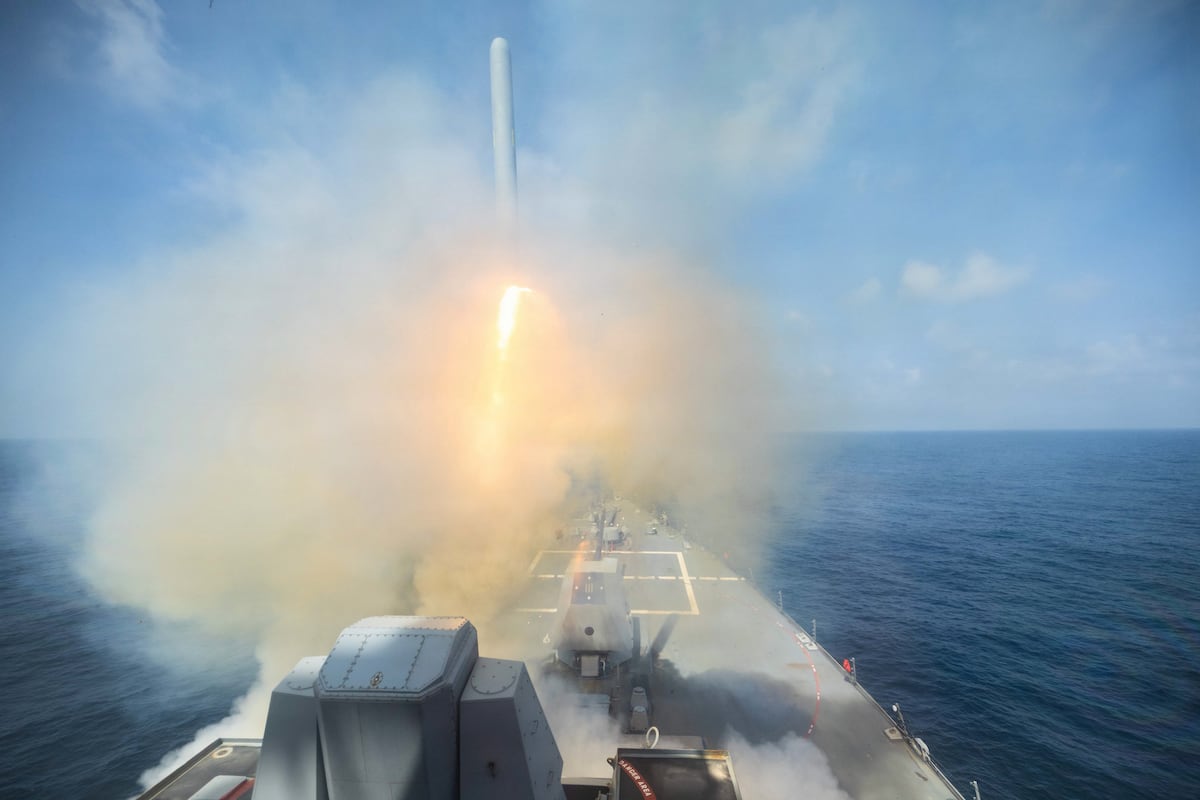
The U.S. carried out self-defense strikes in southern Iran targeting missile launch sites and Iranian boats laying mines, escalating already fragile tensions during the ongoing ceasefire. The article cites multiple recent U.S. retaliatory actions, including strikes on six Iranian boats on May 4, missile and drone sites on May 7, and Iranian-flagged oil tankers on May 8. The risk of renewed conflict around the Strait of Hormuz raises broad implications for defense assets, shipping routes, and energy markets.
The market should treat this less as a one-off headline and more as evidence that the Strait of Hormuz risk premium is becoming a recurring option on energy and shipping. Even if physical flows are not yet impaired, repeated mining/launch-site activity raises insurance, escort, and routing costs immediately; those costs show up before barrels are actually lost, which is why refined product cracks and tanker rates can outperform spot crude in the first leg.
The second-order winner is not just integrated energy but anyone with exposure to freight, marine insurance, or defense supply chains. U.S. and allied naval readiness demand rises as the conflict becomes a persistence problem rather than a discrete strike problem, which can tighten procurement cycles for missiles, counter-drone systems, ISR, and maintenance services over the next several quarters. Meanwhile, Asian importers and European refiners remain the most vulnerable to a shallow but persistent disruption because their margin sensitivity is highest when shipping and feedstock volatility rise together.
The key contrarian point is that the immediate reaction may overstate the probability of a durable supply shock while underpricing a longer-duration attritional regime. If neither side wants a broad war, the base case is a stop-start harassment pattern that lifts volatility without cutting enough barrels to trigger an oil super-spike; that favors options and relative-value over outright beta longs. The main reversal catalyst would be a credible ceasefire extension with verifiable constraints on naval activity and maritime attacks, which could compress the geopolitical risk premium quickly, but that is more likely a weeks-to-months event than a days event.
For the next 1-3 weeks, watch tanker rates, crude time spreads, and defense names with Middle East exposure; those will tell you whether this is noise or regime change. If the escalation keeps repeating, the market will likely rotate from headline-sensitive oil to less crowded beneficiaries with direct leverage to transport friction and defense replenishment.
AI-powered research, real-time alerts, and portfolio analytics for institutional investors.
Request DemoOverall Sentiment
strongly negative
Sentiment Score
-0.55
