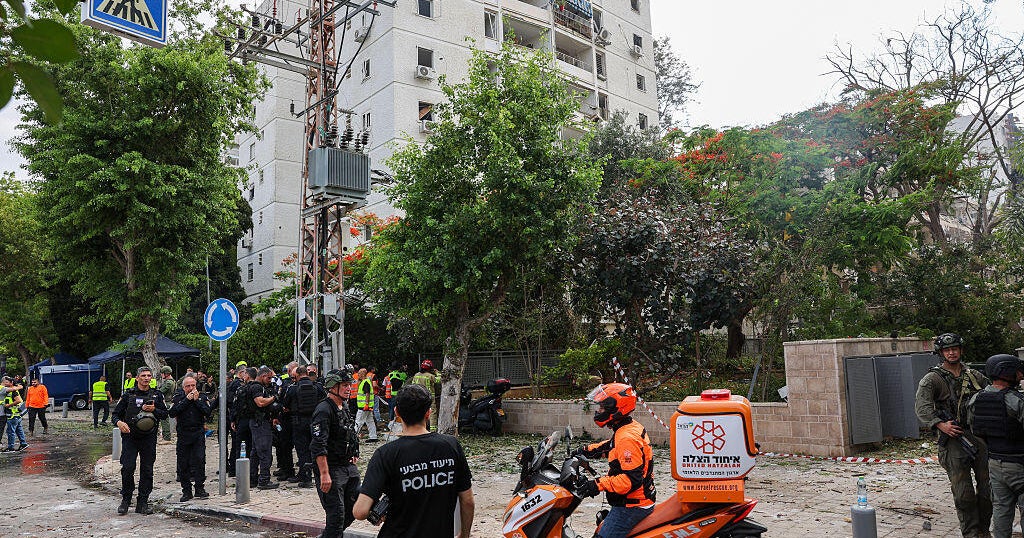
Iran launched missile strikes on Israel, injuring at least 16 people, one critically, and damaging buildings in central Israel. The attacks, which occurred after 7:30 am local time, triggered sirens nationwide and activated Israeli air defenses, with impacts reported as far north as Haifa. Since the beginning of the war with Iran on June 13, at least 50 impacts have been officially acknowledged and 25 people have been killed, with Tel Aviv, Beersheba, and Haifa being the most frequently targeted areas.
A significant military escalation is underway, with Iran launching multiple missile waves into Israel, reportedly in retaliation for a U.S. strike. The conflict, which began on June 13, has resulted in sustained attacks on key Israeli economic centers, including Tel Aviv and the port of Haifa, causing at least 16 casualties and property destruction in the latest barrage. While Israel's sophisticated air defense systems have demonstrated high efficacy, intercepting over 450 missiles and 1,000 drones to date, the persistence and geographic scope of the attacks signal a period of intense and sustained regional instability. The provided signals, indicating strongly negative sentiment (-0.7), a volatile tone, and a moderate-to-high market impact score (0.6), confirm this event is a material driver of market uncertainty. The mention of strict military censorship suggests that reported figures on damages may be conservative, adding a layer of informational risk for investors assessing the situation.
AI-powered research, real-time alerts, and portfolio analytics for institutional investors.
Request DemoOverall Sentiment
strongly negative
Sentiment Score
-0.70
