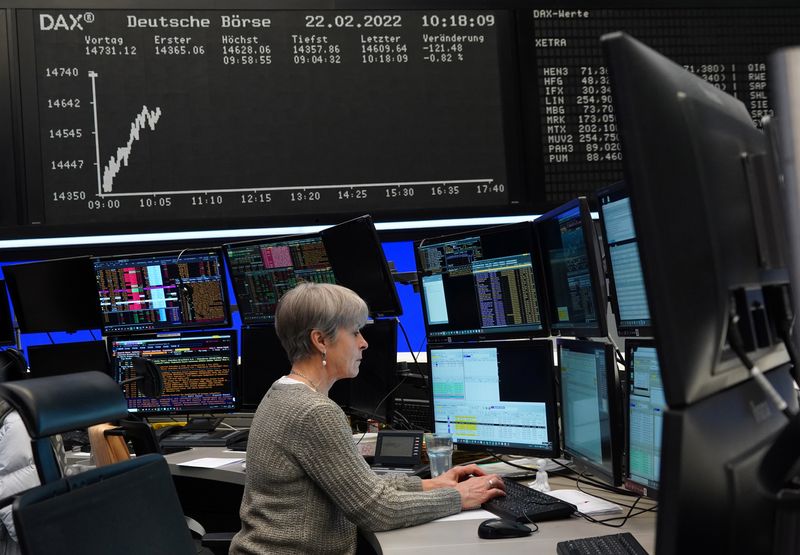
German equities ended lower, with the DAX down 1.25%, the MDAX off 1.16%, and the TecDAX down 0.89%, though losses were trimmed as healthcare-related strength and macro data supported risk appetite. SAP rose 2.16% and Beiersdorf gained 2.14%, while Porsche Automobil Holding fell 6.49% to an all-time low, Zalando dropped 6.32%, and Siemens Energy declined 5.84%. Commodities and FX were mixed: gold rose 1.42% to $4,104.90, crude oil fell about 3.9%, and the DAX volatility index was essentially flat at 17.35.
The market is reacting less to the headline index move than to a visible rotation out of cyclical duration and into defensives/quality. A softer commodity tape and firmer healthcare leadership typically compresses earnings dispersion inside Europe: that favors large-cap software, consumer staples, and select medtech while punishing balance-sheet-sensitive industrials, autos, and capital goods that were already crowded longs.
The sharper signal is not the index drift but the breadth deterioration in Germany alongside higher gold and lower crude. That combination usually reflects a macro regime where growth expectations are being marked down faster than inflation expectations, which can keep pressure on cyclicals for several sessions even if volatility stays contained. If rates keep easing, the first beneficiaries are cash-generative mega-cap franchises; the second-order losers are suppliers leveraged to Chinese demand and European capex.
The clearest idiosyncratic setup is SAP: when macro weakens, investors crowd into businesses with recurring revenue, pricing power, and limited commodity input exposure. In a risk-off tape, SAP can re-rate further versus European software peers because it becomes the default hiding place for institutional money seeking earnings visibility without pure defensiveness. Conversely, the move in autos/industrial software names looks more like de-risking than fundamental repricing, which makes it more reversible if PMIs stabilize.
Contrarian read: the commodity drop may be over-interpreted as growth panic rather than supply normalization. If that’s right, the current underperformance in industrials and semis is likely too deep for a one-day macro print and could mean a tradable mean reversion once the market digests the data. For now, the near-term catalyst is whether DAX breadth continues to deteriorate; if it does, index-level flatness should be sold as a false calm.
AI-powered research, real-time alerts, and portfolio analytics for institutional investors.
Request DemoOverall Sentiment
neutral
Sentiment Score
-0.05
Ticker Sentiment
