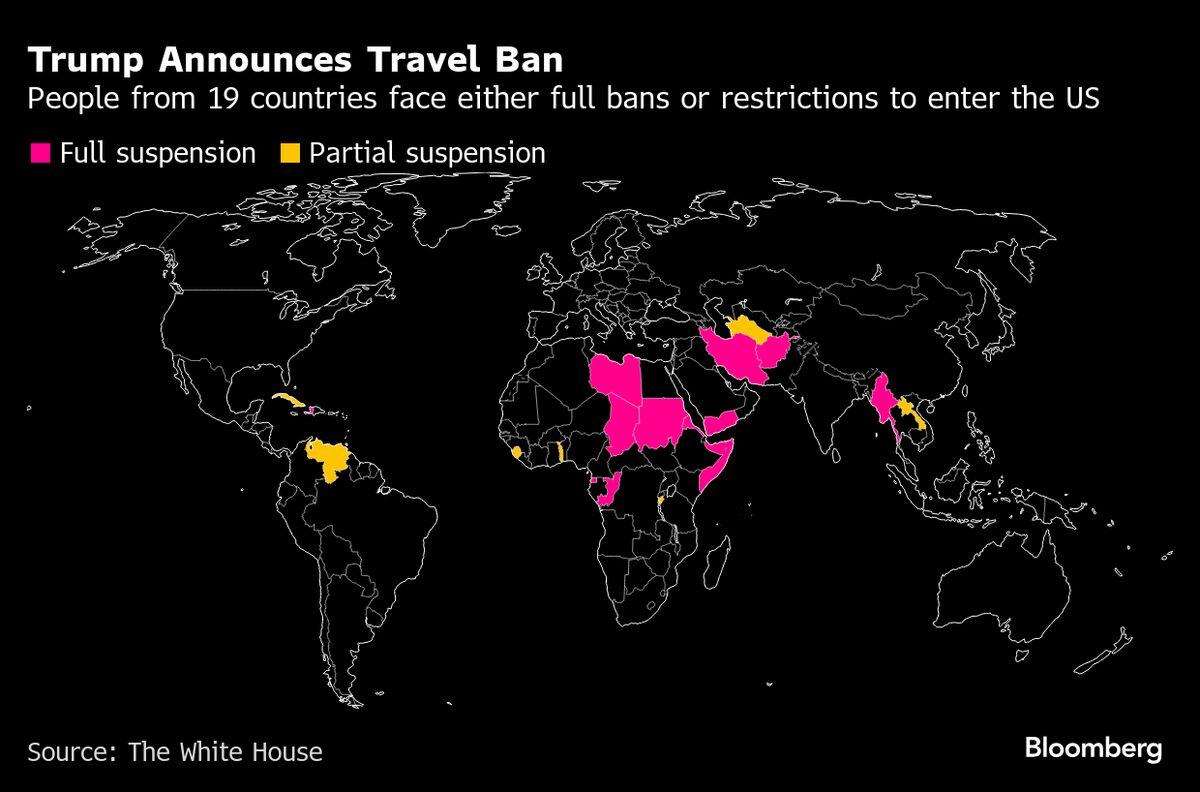
Donald Trump has reinstated a travel ban impacting individuals from 12 countries, including Afghanistan, Iran, Myanmar, and Yemen, citing national security concerns following a terror attack. Separately, Trump suspended visas for foreign students participating in exchange programs at Harvard, alleging misconduct violations, marking an escalation in his administration's conflict with the university following similar accusations against Columbia University.
The Trump administration's recent policy announcements, including the reinstatement of a travel ban on individuals from 12 countries such as Afghanistan, Iran, Myanmar, and Yemen, and the suspension of visas for Harvard University's foreign exchange students, signal a renewed focus on restrictive immigration and a confrontational stance towards certain academic institutions. The travel ban, ostensibly linked by the administration to a terror incident in Colorado involving an Egyptian national (a country not on the ban list), raises questions regarding its specific targeting criteria and rationale. The action against Harvard, citing alleged failures to address conduct violations, follows similar administrative declarations concerning Columbia University, indicating a potential pattern of increased scrutiny or pressure on prominent higher education institutions. These developments align with identified themes of "Elections & Domestic Politics," "Regulation & Legislation," and "Geopolitics," directly impacting the "Travel & Leisure" sector and potentially the international education market. Despite the political significance of these measures, the provided signals indicate a neutral overall sentiment and a low market impact score of 0.15, suggesting that current market perception views these events as having limited immediate, broad-based financial consequences.
AI-powered research, real-time alerts, and portfolio analytics for institutional investors.
Overall Sentiment
neutral
Sentiment Score
0.00
