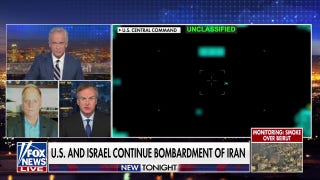
A U.S. submarine strike sank the Iranian warship IRIS Dena off Sri Lanka, killing 87 people with roughly 10 still missing; Sri Lanka is assisting by offloading 208 crew from a second Iranian vessel near Colombo and has dispatched freezers to store recovered bodies. The U.S. Joint Chiefs described the ship as “effectively neutralized” by a single Mark 48 torpedo, while Iran says the sinking occurred in international waters and has sought assistance for repatriation. The incident elevates regional security risk in the Indian Ocean, with potential implications for shipping lanes, energy markets and geopolitical risk premia for investors with exposure to the region.
Market structure: Near-term winners are defense primes (Lockheed Martin LMT, Raytheon/RTX, Northrop Grumman NOC, General Dynamics GD) and oil producers (XOM, CVX) via a short-lived risk premium; losers are commercial shipping, airlines (AAL, DAL) and Sri Lanka/EM credit which will face wider spreads and higher war-risk insurance. Pricing power shifts toward insurers and HRA (High Risk Area) reinsurance underwriters who can raise premia 10–30% within weeks; shipping operators will pass ~USD 50–150/TEU in marginal costs on contested routes if risk persists. Cross-asset: expect short-lived oil +$1–3/bbl, gold +1–2%, USD and JPY safe-haven bids, and 5–15bp downward pressure on U.S. 10y yields in the first 48–72 hours.
Risk assessment: Tail risk of broader US–Iran escalation (5–15% probability) could close critical choke points and lift Brent $15–40 within 1–4 weeks with catastrophic supply shock pricing; cyber and maritime interdiction risks are second-order threats to ports/logistics chains. Immediate (days): volatility spikes and flight-to-quality; short-term (weeks–months): sustained insurance and fuel-cost pressure; long-term (quarters–years): potential structural uplift in defense budgets and regional naval deployments. Catalysts: Iranian retaliation, US operational follow-ups, diplomatic mediation by India/Sri Lanka, and regular weekly EIA/API inventory prints.
Trade implications: Tactical longs in LMT/RTX/NOC (2–4% position sizes total) and gold (GLD 1–2%) hedge geopolitical risk; pair trade long LMT vs short AAL 1:1 to isolate defense vs travel exposure. Use options to size convexity: buy 3-month LMT calls 10% OTM (0.5–1% portfolio) or call spreads to cap premium; establish 1–2% long TLT for immediate risk-off hedging. Entry window: initiate hedges within 48–72 hours, scale core defense longs over 2–6 weeks, trim after 10–20% realized move or clear diplomatic de-escalation within 6–8 weeks.
Contrarian angles: The market often overprices persistent oil disruption after isolated maritime incidents — historical parallels (2019–2020 Persian Gulf skirmishes) show >70% mean reversion within 4–6 weeks. Mispricings: short-dated Brent calls and shipping spreads may be rich; consider selling overpriced 1–3 month oil calls against longer-dated protection. Watch for unintended consequences: rapid US congressional pressure to avoid open conflict could truncate the defense rally; add to longs only if Brent >$95 or evidence of multi-front escalation emerges within 14 days.
AI-powered research, real-time alerts, and portfolio analytics for institutional investors.
Request DemoOverall Sentiment
moderately negative
Sentiment Score
-0.50
