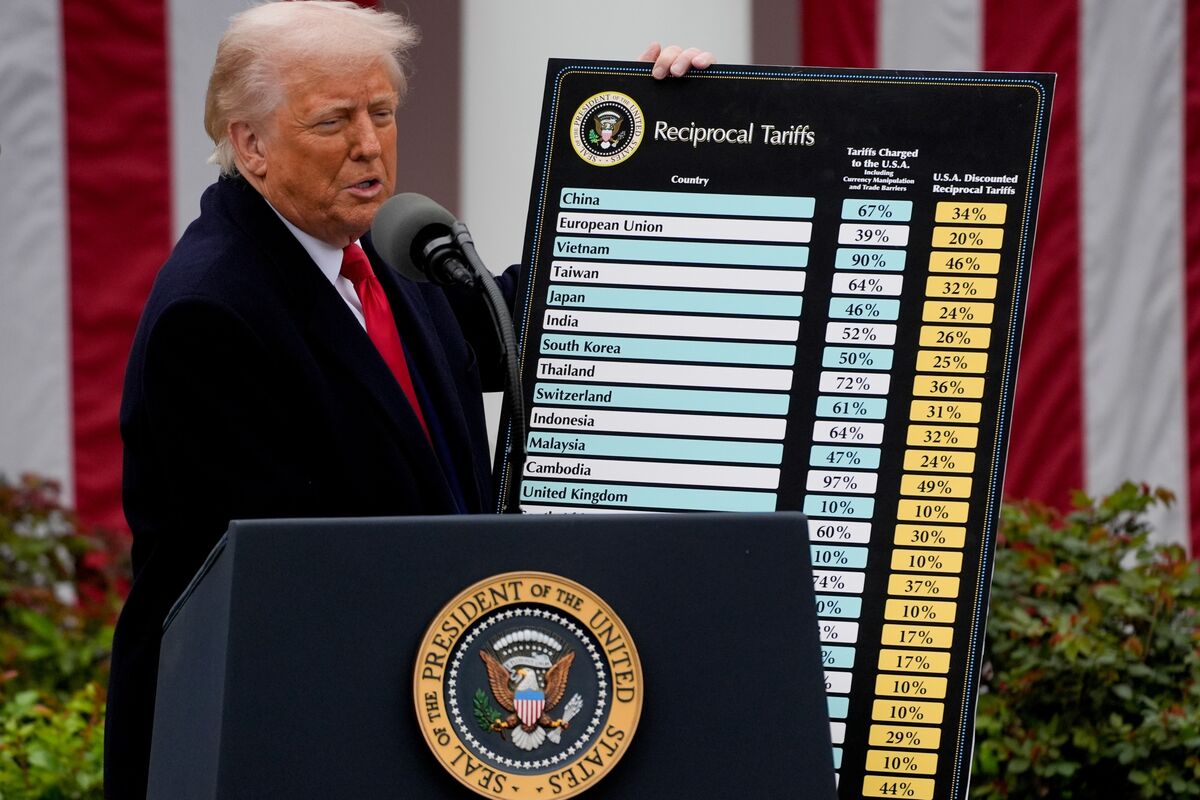
The U.S. Supreme Court is set to determine the legality of Trump-era tariffs, specifically whether former President Trump exceeded his authority by using the 1977 International Emergency Economic Powers Act (IEEPA) to impose import taxes. Lower courts have already ruled that Trump overstepped his bounds in applying the IEEPA for sweeping reciprocal duties and levies against trading partners such as China, Canada, and Mexico. This impending decision will be crucial for defining the scope of presidential power in tariff imposition and could significantly impact future trade policy.
The U.S. Supreme Court is poised to rule on the legality of tariffs imposed by former President Trump, specifically concerning his invocation of the 1977 International Emergency Economic Powers Act (IEEPA). Lower courts have consistently found that Trump exceeded his presidential authority by using the IEEPA to justify sweeping "reciprocal" duties and levies against key trading partners, including China, Canada, and Mexico. These rulings stemmed from challenges by various plaintiffs, including state attorneys general and small businesses.
This impending Supreme Court decision carries significant implications for the scope of presidential power in trade policy and the future application of emergency economic legislation. A ruling upholding the lower court decisions would restrict executive authority to impose tariffs without explicit congressional approval, potentially leading to a more stable and predictable trade environment. Conversely, a reversal could broaden presidential discretion, introducing greater uncertainty into international trade relations.
The market impact is assessed as significant (score 0.7), reflecting the potential for substantial shifts in trade policy and supply chain dynamics depending on the outcome. The overall sentiment is neutral, but the tone is explicitly "uncertain," highlighting the lack of a clear directional market consensus ahead of the ruling. This uncertainty is a key factor for investors monitoring global trade flows and regulatory risks.
AI-powered research, real-time alerts, and portfolio analytics for institutional investors.
Overall Sentiment
neutral
Sentiment Score
0.00
