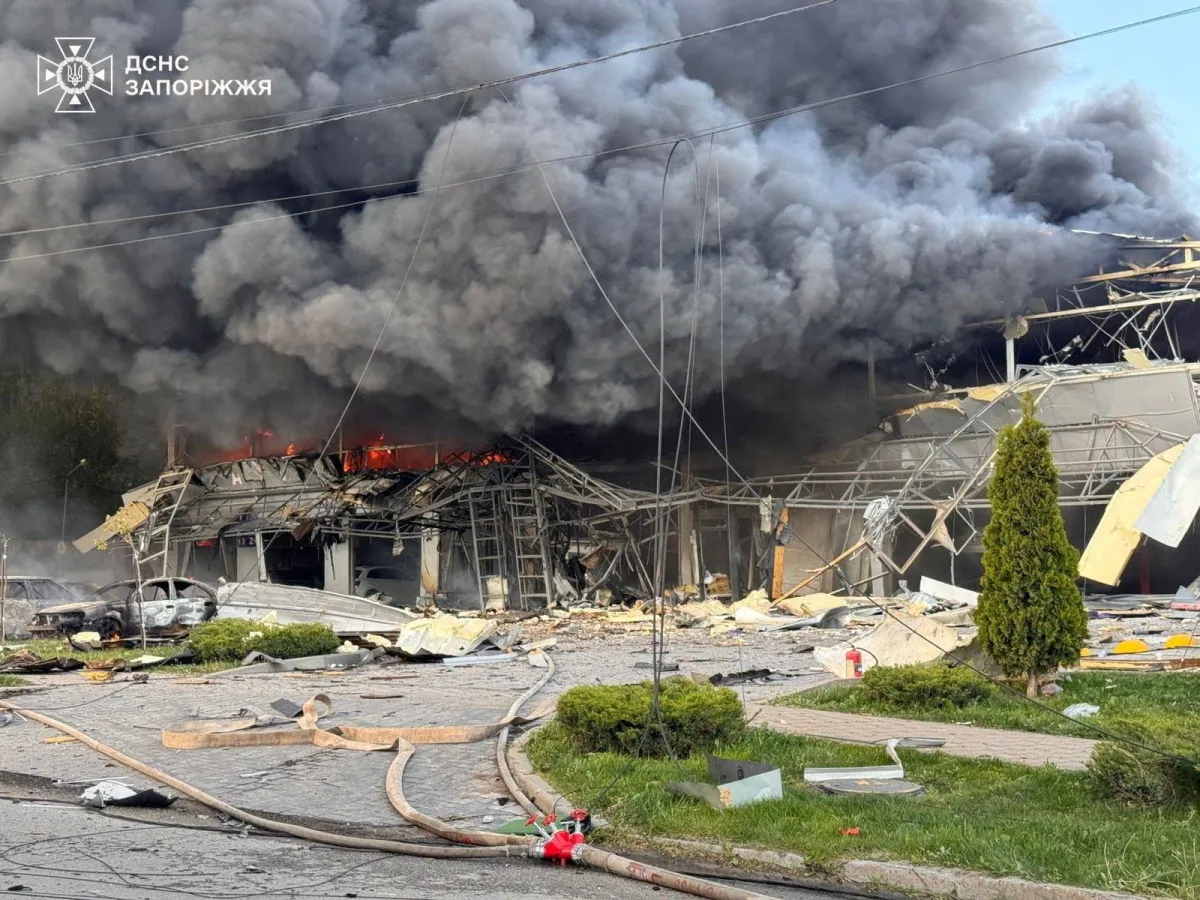
Russia and Ukraine exchanged major drone and missile attacks, with Ukraine saying it downed 56 drones while Russia claimed it intercepted 264 Ukrainian drones during Moscow's unilateral two-day ceasefire. The truce appears to be collapsing, and both sides are signaling further escalation around Russia's May 9 Victory Day parade. The heightened conflict raises near-term geopolitical risk and could pressure European risk assets, defense, energy, and regional sentiment.
The key market implication is not the headline violence itself, but the erosion of signaling credibility: when ceasefire rhetoric becomes operational cover for escalation, front-line risk premia stop being localized and start getting priced into wider European duration, FX, and defense procurement expectations. That typically benefits assets tied to rearmament, electronic warfare, drones, satellite comms, and perimeter security more than traditional heavy armor, because the marginal lesson from this phase of the war is about distributed, low-cost strike capacity defeating static defenses.
Second-order pressure should show up in infrastructure-adjacent names with Ukrainian or Russian exposure less through direct damage than through logistics friction: intermittent internet shutdowns, airspace disruption, and elevated convoy/rail risk raise working-capital needs and inventory buffers. The more important medium-term effect is on cyber and communications resilience budgets across NATO and border states, as government and enterprise buyers respond to the demonstrated ability to use drones plus information disruption as a combined operational tool. That argues for a sustained spending cycle, not a one-day headline trade.
The contrarian takeaway is that the market may still be underpricing the probability of a negotiated pause being pushed out by months rather than days. If both sides are incentivized to use the commemorative window to signal resolve, the near-term catalyst becomes not peace but a broader drone-and-missile escalation regime, which historically lifts defense sentiment while suppressing Eastern Europe risk assets, airlines, and regional consumer discretionary. The main reversal risk is diplomatic pressure after an accidental strike on a diplomatic target or a parade-day incident; that could create a sharp but likely temporary de-risking squeeze in defense leaders and European cyclicals within 24-72 hours.
AI-powered research, real-time alerts, and portfolio analytics for institutional investors.
Request DemoOverall Sentiment
strongly negative
Sentiment Score
-0.70
