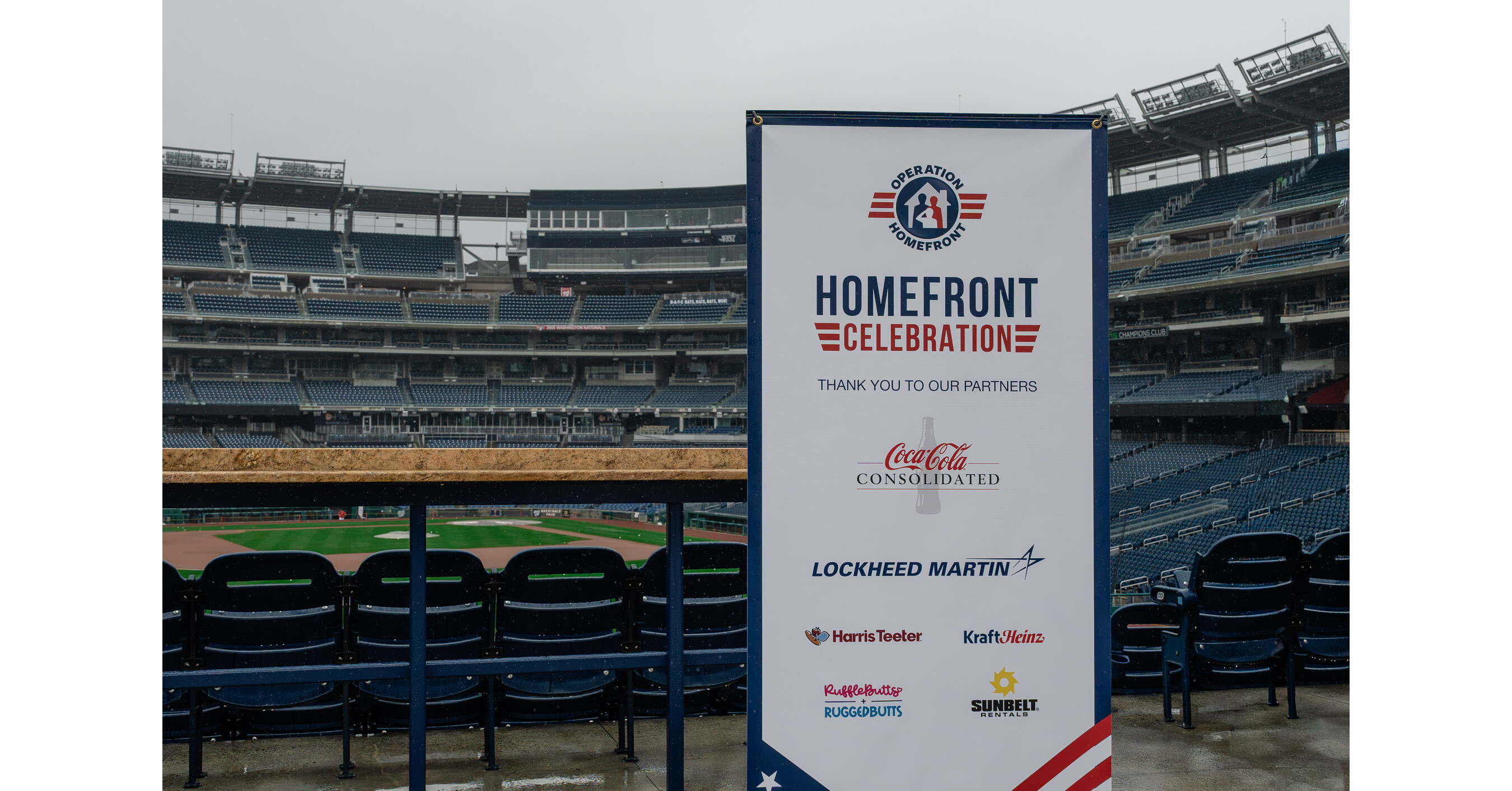
Operation Homefront hosted its inaugural 2026 Homefront Celebration at Nationals Park, bringing 600 military family members together. The program addressed reported hardship—59% of military families lack confidence in continued support and 28% face low/very low food security—by providing meal kits to attendees, while noting 230,000+ meals distributed since 2010. The news is primarily nonprofit/event-focused with minimal direct market impact.
This is effectively a CSR/brand-maintenance event, not a fundamental demand or contract signal. The sponsor set tells you where managements think marginal reputational capital matters: consumer staples are paying for visibility with households, and LMT is buying goodwill around military families where procurement optics and public-sector relationships matter more than near-term revenue.
For COKE/KO/KHC, any benefit is second-order and diffuse: incremental brand affinity, local distributor goodwill, and a small halo with value-oriented consumers. The spend is likely immaterial relative to SG&A, so the market should not extrapolate meaningful volume lift or multiple expansion unless there is evidence of a broader campaign translating into scanner data or share gains over several quarters.
LMT is the only name where there is a plausible strategic angle, but it is reputational rather than financial. This kind of support can help insulate the franchise from narrative risk around defense budgets and employee/ESG scrutiny, yet it does not change backlog, margins, or FY guidance. The contrarian view is that investors may overrate “brand” headlines; the more important read-through is that these companies still see consumer and civic engagement as necessary defensive spend in a slower demand environment, which implies they are protecting share rather than accelerating it.
AI-powered research, real-time alerts, and portfolio analytics for institutional investors.
Overall Sentiment
neutral
Sentiment Score
0.00
Ticker Sentiment
