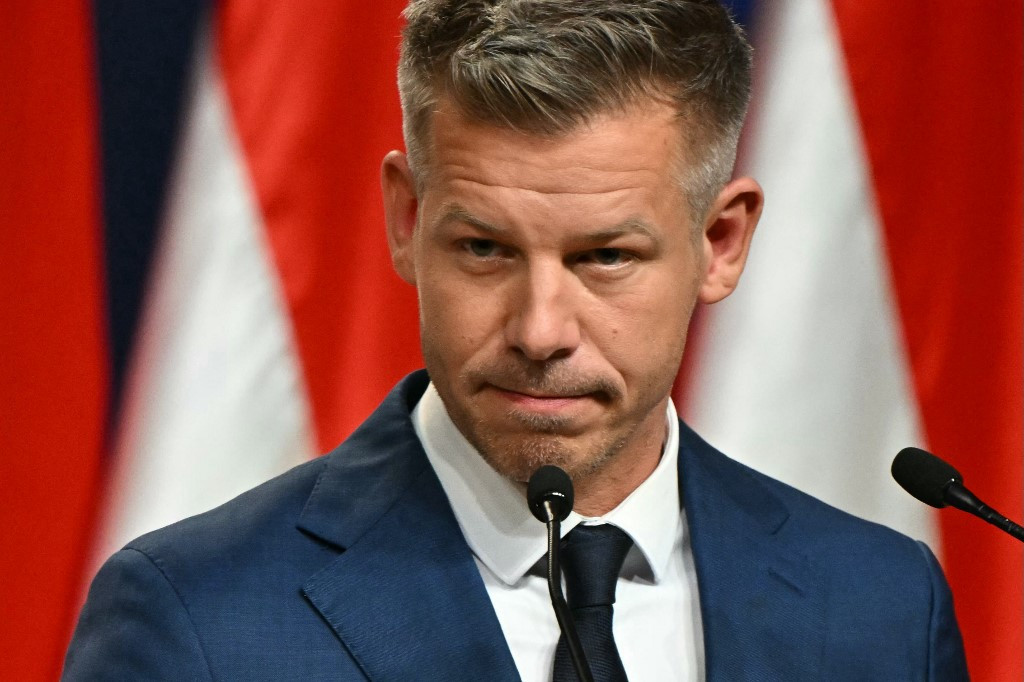
Incoming Hungarian Prime Minister Péter Magyar alleged that oligarchs linked to Viktor Orbán are moving tens of billions of euros out of Hungary and preparing to flee abroad, including to Dubai. He called for asset freezes and arrests before his government takes office in May, signaling a potentially aggressive anti-corruption push. The episode raises near-term political and governance uncertainty in Hungary, though the direct market impact is likely limited outside local assets.
The market-relevant issue here is not the political theater; it is the abrupt repricing of sovereign and quasi-sovereign governance risk in a country where capital formation depends heavily on EU transfers, bank confidence, and elite asset safety. A credible anti-corruption sweep would initially be positive for Hungary’s medium-term institutional premium, but the first-order tradable effect is usually a liquidity shock: capital flight, FX pressure, wider local funding spreads, and a pause in domestic capex until the new regime proves it can enforce rule-of-law without freezing the economy. That makes the next 2-8 weeks the key window, not the eventual reform outcome.
The second-order winner is likely any external arbiter of capital discipline — EU institutions, international lenders, and foreign direct investors that were previously sidelined by crony networks. The losers are domestically exposed banks, construction, real estate, and firms tied to state procurement, because even a partial unwind of politically connected ownership tends to hit credit formation before it improves transparency. If oligarch capital is actually moving offshore, expect a negative feedback loop: local asset sales pressure prices, which triggers more withdrawals and pushes the central bank toward defensive policy at exactly the wrong moment.
The contrarian risk is that the clean-up narrative is overstated and the transition becomes selective rather than systemic. If the new government targets a few symbolic figures but preserves the broader patronage machinery, the selloff in domestic assets could reverse quickly once investors conclude continuity is intact. Conversely, if the crackdown broadens, the pain could extend for months via administrative paralysis, court challenges, and delayed EU disbursements even if the long-run governance story improves.
AI-powered research, real-time alerts, and portfolio analytics for institutional investors.
Request DemoOverall Sentiment
mildly negative
Sentiment Score
-0.25
