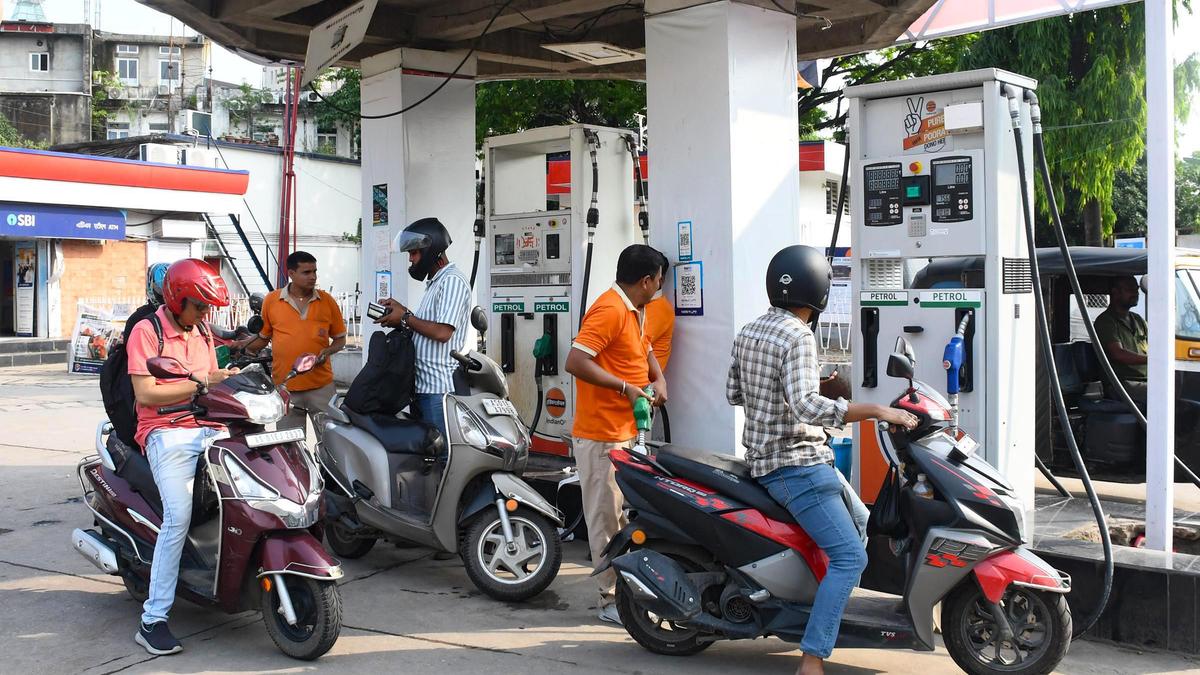
India hiked petrol and diesel prices for the fourth time in 10 days, lifting rates by about ₹2.7-₹2.8 per litre in the latest tranche and by roughly ₹7.5 per litre cumulatively since May 15. Delhi petrol crossed ₹100 per litre, rising to ₹102.12, while Mumbai, Kolkata and Chennai also saw sharp increases; Kolkata recorded the highest petrol price at ₹113.51 and Mumbai the steepest diesel hike at ₹97.83. The move comes as Indian crude basket prices averaged $107.96 per barrel through May 22, with Brent still near $98.59 despite easing on peace-deal hopes.
This is less a one-off pump-price headline than the start of a delayed pass-through cycle that should show up in India’s next 4-8 weeks of inflation prints. The first-order hit is obvious, but the second-order effect is more important: transport, FMCG distribution, construction logistics, and discretionary consumption all face a margin squeeze just as the market was starting to price in benign inflation. The fact that the increase is broad-based across metros suggests the policy intent is to rebuild upstream margin rather than calibrate by region, which increases the probability of more hikes if crude stays above the high-$90s.
The near-term market winner is the upstream complex and refiners with export optionality, but the cleanest expression is not a simple long crude bet. If Brent stays near $100 while domestic retail prices reset upward, OMC earnings should mechanically improve, but only with a lag and only if inventory losses do not reappear; meanwhile, consumer-facing sectors with weak pricing power may see the opposite effect immediately. The biggest second-order loser is volume growth in autos and two-wheelers: fuel affordability becomes a visible tax on lower-income households, which tends to hit entry-level vehicle demand before it shows up in headline consumption data.
Contrarian risk: the market may be extrapolating a sustained oil shock when the catalyst is clearly geopolitical and therefore reversible on a shorter leash than fundamentals. A credible de-escalation in the Middle East can knock Brent back quickly, which would leave energy longs crowded and expose anyone shorting India duration too aggressively. The better read is that this is a volatility event for inflation expectations rather than a multi-quarter terms-of-trade deterioration unless crude holds above $100 for several months.
AI-powered research, real-time alerts, and portfolio analytics for institutional investors.
Request DemoOverall Sentiment
mildly negative
Sentiment Score
-0.28
