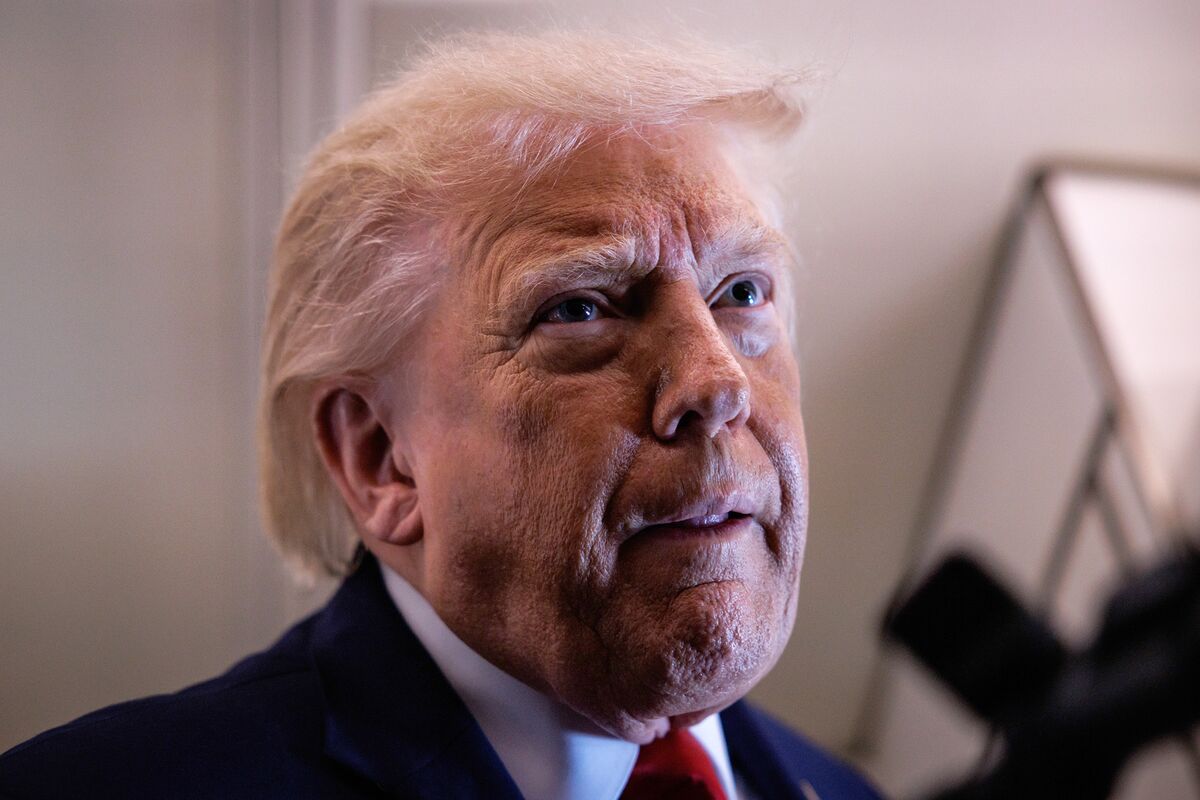
President Donald Trump said he supports reviving the proposed anti-weaponization fund, which would total $1.8 billion, despite GOP backlash. He also left open the possibility of directing some of the funds to rioters convicted of assaulting police in the Jan. 6 Capitol attacks. The remarks add political controversy, but the article does not indicate an immediate market-moving policy change.
The market relevance is not the headline itself but the signaling around fiscal discretion and institutional friction. If the administration pushes a politically charged payout mechanism, the first-order effect is a higher premium on legal and appropriations uncertainty; the second-order effect is that every future “settlement” or discretionary fund becomes a target for courts, inspectors general, and congressional resistance, raising execution risk for government-linked counterparties and lobbying-dependent business models. In practice, this is more a volatility catalyst than a durable policy regime.
The clearest winners are litigation-adjacent firms and policy consultants that monetize chaos, while losers are entities exposed to discretionary federal payments or reputational spillover from association with politically sensitive disbursements. The bigger systemic implication is for muni and Treasury markets only at the margin: this kind of headline adds noise to deficit optics, but not enough to change macro pricing unless it becomes part of a broader pattern of off-budget fiscal maneuvering. The more relevant trade is in event-driven hedges around Washington risk, not directional macro duration.
Catalyst timing is near-term to multi-month. In the next few days, expect headline volatility in political risk proxies; over months, the key question is whether GOP pushback forces a full retreat or a narrower legal workaround. If approval looks plausible, that raises the odds of follow-on challenges and a slower, messier implementation path; if it dies quickly, the trade fades just as fast.
Consensus may be underpricing the precedent value: the real issue is not the dollar amount but the normalization of using settlement-like vehicles as politically allocable pools. That can have a chilling effect on agencies and counterparties that rely on stable settlement frameworks, while increasing the value of firms with strong government-relations and compliance capabilities. The mispricing opportunity is in assuming this is pure theater; even failed attempts can widen the governance discount for weeks.
AI-powered research, real-time alerts, and portfolio analytics for institutional investors.
Request DemoOverall Sentiment
neutral
Sentiment Score
-0.05
