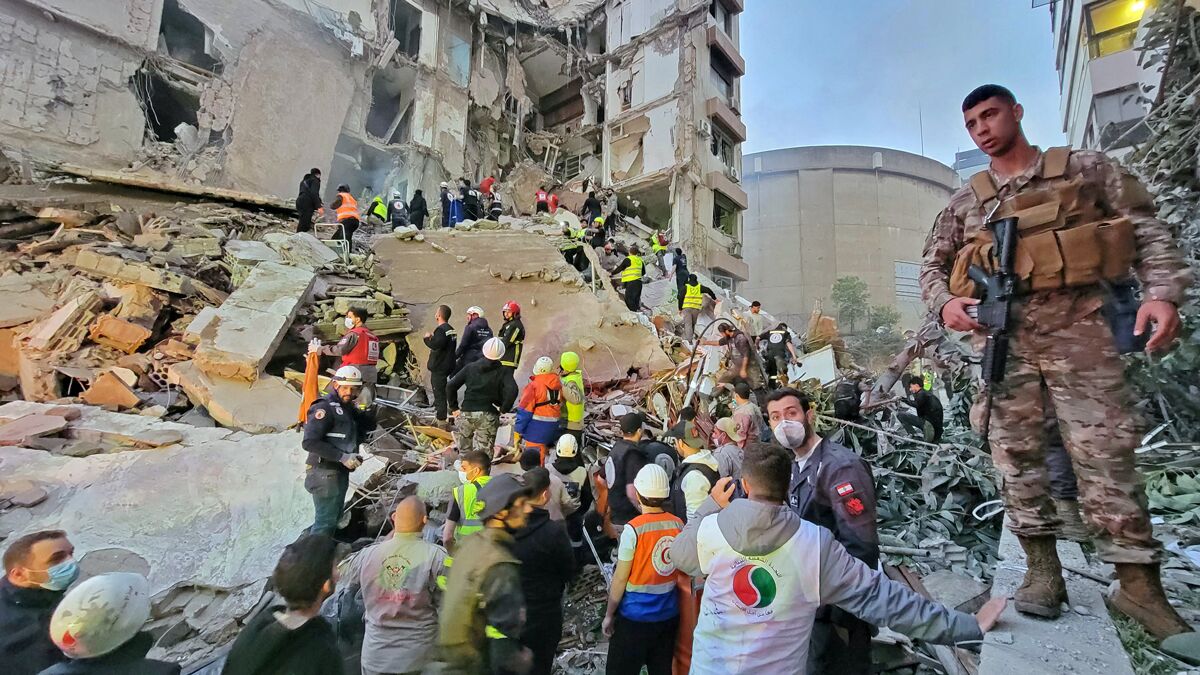
The UK will push to include Lebanon in the US-Iran ceasefire as Foreign Secretary Yvette Cooper warns fighting on Israel’s northern frontier could unravel the truce; Iranian officials say the ceasefire was violated after Israel launched its largest assault on its northern neighbor. Cooper will press the case in a City of London speech on Thursday evening, highlighting elevated regional risk that could affect markets sensitive to Middle East escalation.
Including Lebanon in the US‑Iran ceasefire calculus changes the probability distribution of northern‑front escalation versus localized flareups. If Hezbollah becomes an explicit party to a truce (or an explicit exception), the market moves from a short, headline‑driven volatility regime (hours–weeks) to a sustained risk premium (months) because supply chains for rockets, air defense, ISR and precision munitions would face multi‑month demand shocks and expedited procurement cycles. That drives front‑loaded revenues for primes and creates inventory/replenishment squeezes across guided‑munition subcontractors.
The near term (days–weeks) tail risks are asymmetric: an Israeli large‑scale incursion into Lebanon or reciprocal Hezbollah strikes could abruptly widen insurance/warrants on Mediterranean shipping, raise war‑risk premiums for tankers and raise short‑dated oil volatility; conversely, a successful diplomatic push to put Lebanon inside a broad truce is the single high‑probability de‑risking catalyst that would compress defense and energy premia rapidly. Watch diplomatic calendar, UK/US/Russia mediation notes and visible changes in force posture (air defense activations, mobilizations) as 48–96 hour micro‑catalysts.
Second‑order: protracted instability delays inbound FDI and reconstruction cycles in Lebanon for 12–36 months while accelerating demand for emergency infrastructure (port repair, power generation, telecom backhaul) if the front stabilizes. That bifurcation creates a short window to trade both defense/order intake and later civil‑engineering beneficiaries if a ceasefire morphs into a reconstruction mandate — a two‑stage trade with distinct time horizons and counterparty credit risk to price in.
AI-powered research, real-time alerts, and portfolio analytics for institutional investors.
Request DemoOverall Sentiment
moderately negative
Sentiment Score
-0.45
