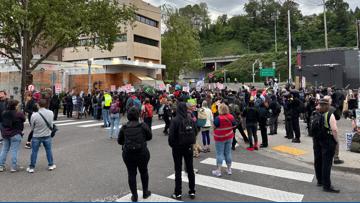
One person was found dead after a vehicle crashed through the front entrance of the Multnomah Athletic Club in Portland and caught fire, with police identifying evidence of an explosive device in the vehicle. The club is closed until further notice and all programs, services, and scheduled activities have been cancelled while authorities investigate. The incident appears isolated and is unlikely to have broad market impact, though it creates temporary operational disruption for the club.
This is less a single-asset event than a localized shock to urban commercial real estate and adjacent service economies: the immediate hit is to neighborhood foot traffic, security spend, and event-driven revenue, while the longer tail is higher insurance pricing and tighter underwriting for properties with public-facing entrances in dense downtown corridors. The fact pattern also raises the probability of a broader perimeter review around similar clubs, gyms, hotels, and entertainment venues that rely on open access and limited hardening. Even if direct economic damage is contained, the second-order cost is reputational: boards and operators will likely accelerate capital plans for bollards, setback redesigns, camera coverage, and access controls.
The market implication is that physical security vendors should see a modest but durable demand uplift, especially names selling retrofit solutions rather than long-cycle municipal infrastructure. The better setup is in companies exposed to insurance-driven CapEx budgets and recurring monitoring fees, because those revenue streams tend to re-rate faster after headline risk than pure hardware orders. On the losers side, small-cap REITs and privately held urban hospitality assets may face a few quarters of elevated occupancy friction if tenants and members reassess perceived safety, though this is more of a margin drag than a fundamental demand collapse.
The contrarian point is that the immediate reaction usually overweights one-off headline severity and underweights the institutional response that follows. If this remains an isolated incident, the real tradeable effect is not fear itself but the backlog of remediation spending that gets approved over the next 1-3 quarters. The key catalyst to watch is whether similar incidents cluster in other downtown nodes; if they do, security CapEx becomes a multi-year budget line rather than a temporary response.
AI-powered research, real-time alerts, and portfolio analytics for institutional investors.
Request DemoOverall Sentiment
strongly negative
Sentiment Score
-0.45
