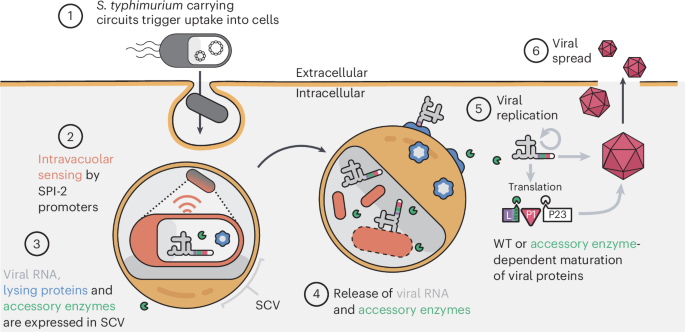
A new platform, CAPPSID, leverages engineered Salmonella typhimurium bacteria to deliver and control an oncolytic Senecavirus A (SVA) for cancer therapy. This cooperative microbial system enables the virus to bypass systemic neutralizing antibodies and achieve complete tumor regression in immunocompetent mouse models, overcoming significant limitations of conventional oncolytic virotherapies. By allowing bacterial control over viral maturation and spread via a delivered protease, CAPPSID offers a potent, safer, and more persistent approach to targeted tumor eradication.
This research details the development of CAPPSID, a novel therapeutic platform that synthetically combines engineered Salmonella typhimurium bacteria with an oncolytic Senecavirus A (SVA). The platform addresses two primary limitations of existing cancer therapies: it enables an oncolytic virus to bypass pre-existing neutralizing antibodies for systemic delivery, and it extends the therapeutic reach of bacteria beyond the tumor core. Pre-clinical data from mouse models are highly compelling, demonstrating complete regression of small-cell lung cancer (SCLC) tumors and 100% survival in treated cohorts. Crucially, the system proved effective when delivered intravenously in fully immunocompetent mice with established anti-SVA immunity, a significant hurdle for conventional virotherapies. A key innovation is the engineered control mechanism, where viral maturation is made dependent on a bacterially-delivered protease (TEVp), effectively creating a self-limiting but persistent wave of viral spread. This programmability enhances the safety profile by constraining viral replication to the tumor vicinity, mitigating the risk of uncontrolled systemic infection while showing superior persistence over non-spreading viral replicons.
AI-powered research, real-time alerts, and portfolio analytics for institutional investors.
Request DemoOverall Sentiment
extremely positive
Sentiment Score
0.85
