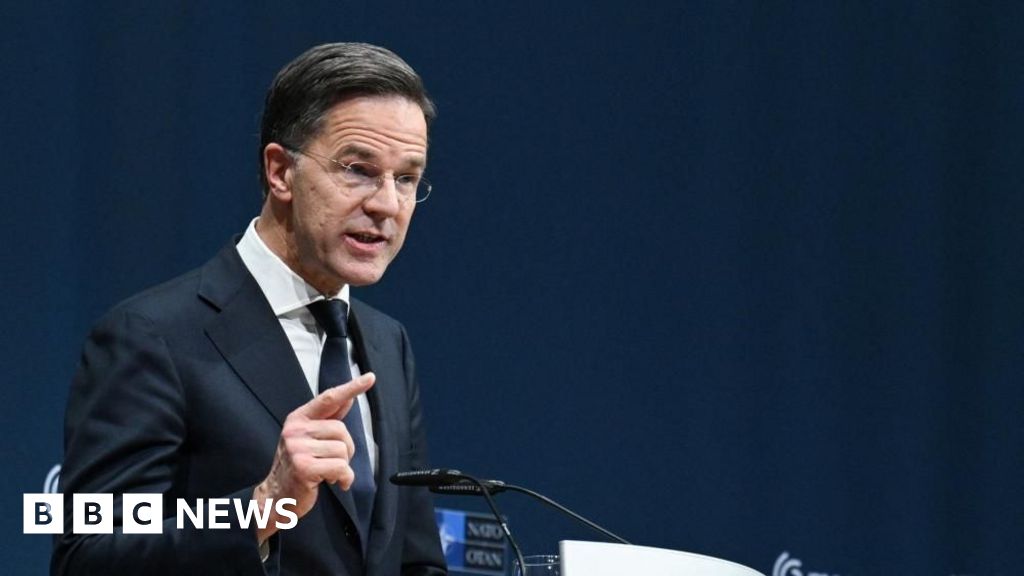
NATO secretary-general Mark Rutte warned Russia could attack a NATO country within five years, saying Moscow is already escalating covert “hybrid” campaigns and Europe must prepare for large-scale war; he argued that supporting Ukraine is central to European security. He highlighted Russia’s industrial mobilization—Kiel Institute figures of roughly 150 tanks, 550 infantry fighting vehicles, 120 Lancet drones and more than 50 artillery pieces produced monthly—and noted Western Europe is years from matching that output, prompting moves such as France and Germany reviving voluntary military service. Rutte urged rapid increases in allied defence spending and production, saying NATO can hold for now but complacency is dangerous, a development that implies sustained defence budgets, accelerated procurement and heightened geopolitical risk for markets.
NATO secretary-general Mark Rutte warned Russia could attack a NATO country within five years, saying Moscow is “already escalating its covert campaign against our societies” and urging preparedness for large-scale war. His comments came alongside references to President Putin’s recent statements that Russia is not planning war but is “ready right now,” and follow Western intelligence assessments that Moscow has intensified hybrid operations which Russia dismisses as hysteria.
A Kiel Institute report cited by Rutte estimates Russian monthly production at roughly 150 tanks, 550 infantry fighting vehicles, 120 Lancet drones and more than 50 artillery pieces, a level Western Europe is not near matching; France and Germany are reviving voluntary military service to bolster manpower. Rutte’s call that allied defence spending and production “must rise rapidly” signals a multi-year procurement cycle and sustained budget increases for defense-capable industries.
Hybrid threats—cyber-attacks, disinformation and drone incidents near airports and bases—are ramping up this year, increasing near-term operational risks and likely accelerating demand for cybersecurity, ISR, munitions and logistics suppliers. The combination of elevated geopolitical risk and explicit NATO procurement imperatives implies sectoral winners (defense, cybersecurity) and higher market volatility in European assets tied to exposure near the conflict zone.
AI-powered research, real-time alerts, and portfolio analytics for institutional investors.
Request DemoOverall Sentiment
moderately negative
Sentiment Score
-0.65
