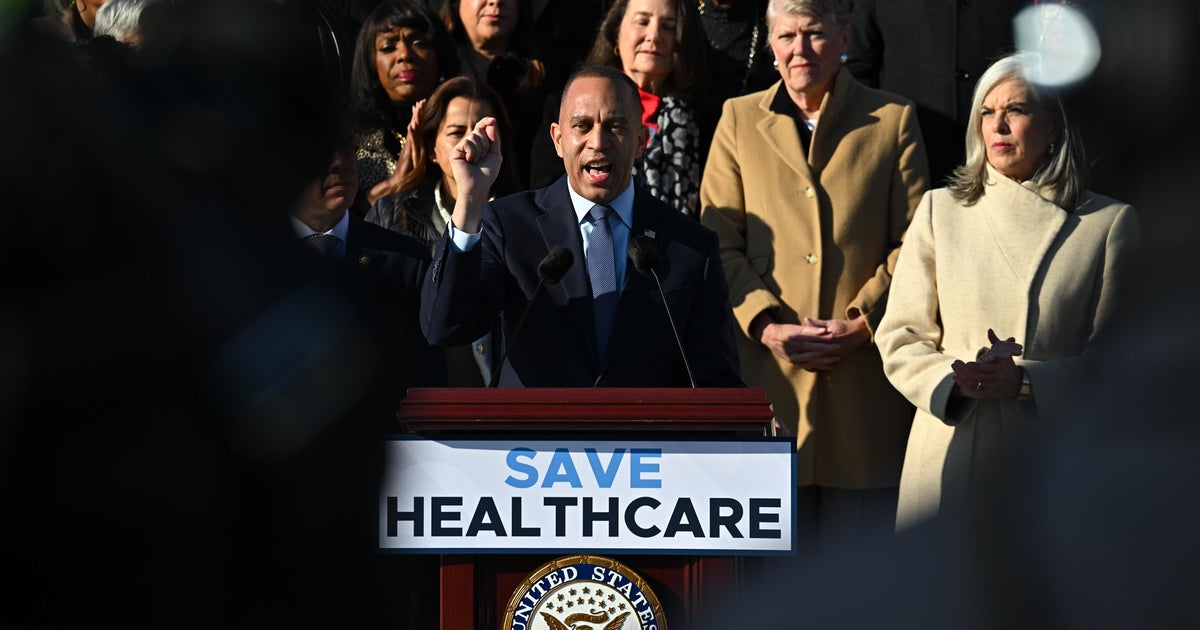
House Democrats secured a discharge petition that reached the 218-signature threshold to force a vote on extending enhanced Affordable Care Act tax credits that expire Dec. 31, a change that could otherwise trigger steep premium increases for roughly 22 million ACA enrollees. Procedural rules requiring seven legislative days make a floor vote unlikely until January, Speaker Mike Johnson has signaled Republicans will not act before the new year, and the Senate recently rejected a clean three-year extension—leaving short-term policy uncertainty for insurers, consumer spending and healthcare-related equities while bipartisan talks continue.
Market structure: The imminent expiration of enhanced ACA tax credits affects ~22M enrollees and can lift average exchange premiums materially; a reasonable scenario is a 15–40% median premium increase for subsidized enrollees if credits lapse, which compresses disposable income and risks adverse selection (healthier people drop coverage). Direct winners in the near-term: discount retailers (WMT, COST) and integrated care players (CVS, UNH, ELV) that can internalize care; direct losers: marketplace-focused carriers (CNC, some regional carriers) and hospital systems exposed to higher uncompensated care (HCA). Competitive dynamics will favor large vertically-integrated players that can shift risk and capture pharmacy/ancillary spend.
Risk assessment: Tail risks include a no-extension outcome causing a sharp enrollment drop and a 1–2ppt hit to insurer medical-loss ratios (MLRs) into 2025, or conversely a surprise clean multi-year extension that re-rates insurers upward. Immediate-term (days) political scheduling risk dominates; short-term (weeks–months) is earnings guidance season and Jan legislative calendar; long-term (quarters) is potential program redesign at the state level. Hidden dependencies: many 2025 premium filings may already bake in policy expectations, so market reaction could be muted or overstated depending on legislated details.
Trade implications: Expect elevated idiosyncratic volatility in insurer/healthcare names into the Jan reconvening. Tactical plays: hedge insurer cyclicality (buy 3–6 month puts or put spreads on high-ACA-exposure names), pair trade large diversified insurers vs pure-exchange carriers, and shift 1–3% allocations into consumer staples/discount retail as recession-lite protection. Options volatility on UNH/CNC/HUM should widen into January; use defined-risk spreads to limit premium bleed.
Contrarian angles: Consensus assumes universal pain for insurers, but large integrated insurers (UNH, CVS, ELV) can gain share if smaller exchange carriers retrench — extension with reforms could actually favor the big players. Market may have over-rotated into broad short-insurer positions; look for mispricings where exchange-focused carriers already trade >20% below fair value if a bipartisan short extension (1–3 years) passes. Unintended consequence: a targeted short extension plus network/tiering reforms could accelerate consolidation benefitting vertically-integrated firms.
AI-powered research, real-time alerts, and portfolio analytics for institutional investors.
Request DemoOverall Sentiment
moderately negative
Sentiment Score
-0.30
