

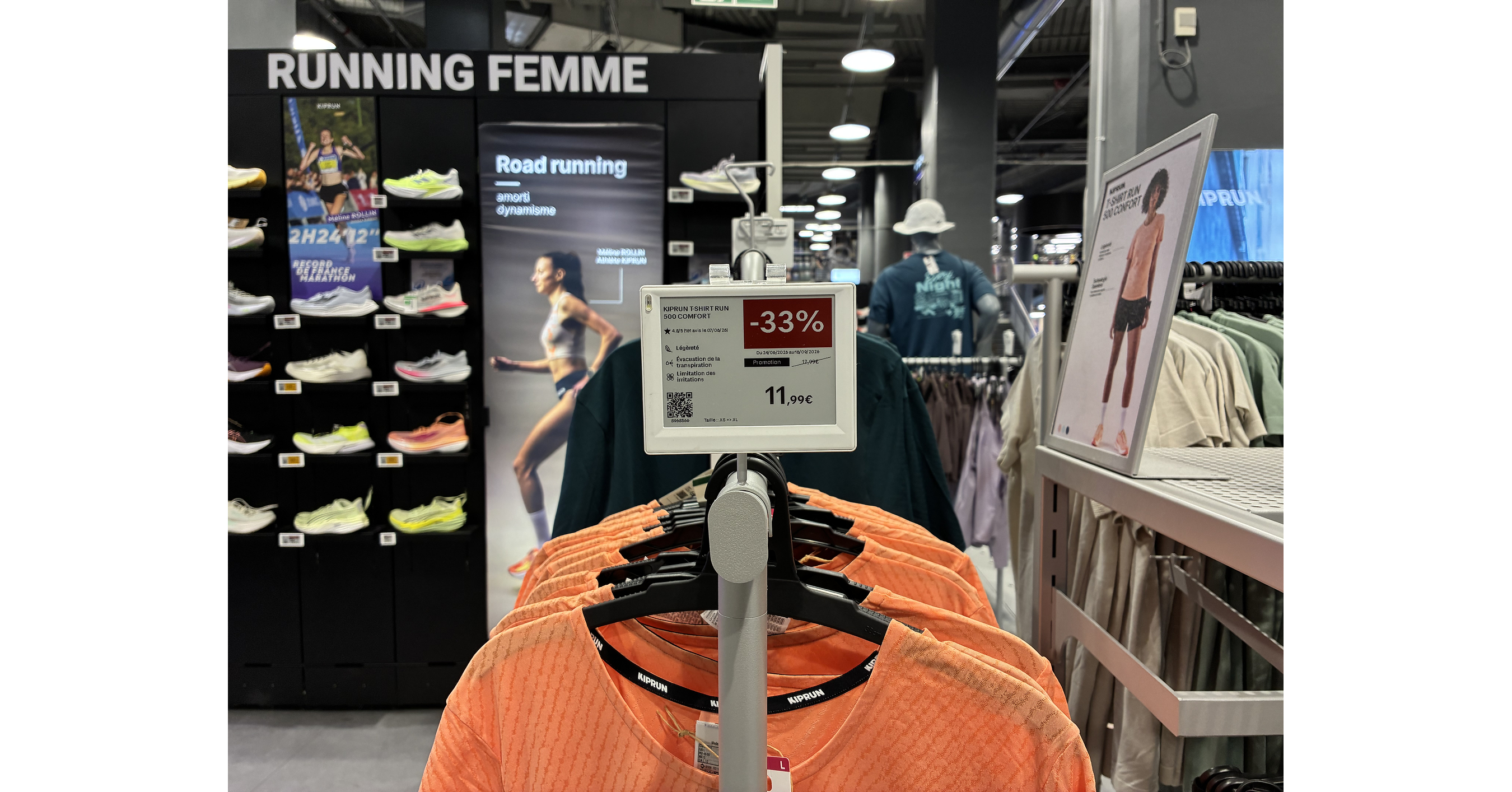
Vusion said Decathlon reached 700 stores using its digital shelf-label and price automation platform, expanding deployment across 54 countries on three continents. The rollout is intended to improve store productivity via synchronized electronic shelf labels and nearly eliminate shelf-vs-checkout pricing discrepancies. Overall, the update points to continued scaling of Vusion’s retail digitalization footprint with modest, likely stock-level impact.
This reads more like a credibility event than a near-term earnings step-up. For Vusion/SRBEF, the economic value is not the store count itself but the signaling effect: a globally distributed retailer standardizing on one platform raises switching costs, makes procurement at other chains easier, and strengthens the case that ESL is becoming a category standard rather than a discretionary pilot. That usually supports multiple expansion more than near-term revenue, because the market starts to underwrite a longer runway for software, services, and replacement demand after the initial hardware wave.
The second-order winner is the retail networking layer around Cisco Meraki: if Vusion can ride existing infrastructure without incremental hardware, it reduces deployment friction for future retail rollouts and reinforces Meraki’s role as the default enterprise edge in stores. The downside is that this is still a customer-specific implementation, so the cash flow impact is likely deferred until broader chain adoption, refresh cycles, and software attach show up in reported backlog or recurring revenue. The contrarian risk is that investors may overread a large named rollout as acceleration when it may simply reflect one anchor customer expanding a program already underway; if quarterly order intake or gross margin fails to inflect, the stock should give back any enthusiasm quickly.
AI-powered research, real-time alerts, and portfolio analytics for institutional investors.
Request TrialOverall Sentiment
mildly positive
Sentiment Score
0.20
Ticker Sentiment
