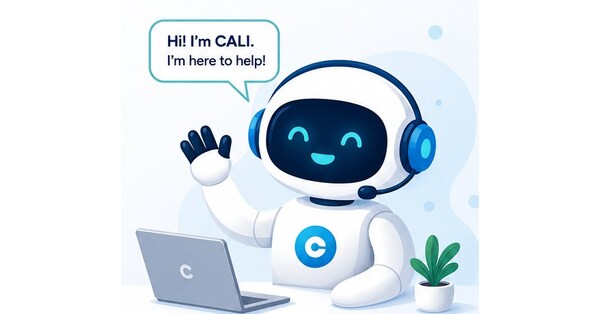
Caliber Public Safety launched CALI, an AI-powered 24/7 customer support assistant available to all Caliber customers at no additional cost via the Caliber Customer Support HUB. The company cites a 38.7% deflection rate for Tier 1-type support requests, suggesting faster resolution of common issues by drawing on documentation-backed product knowledge. While mainly an operational/product update, the result could modestly improve support efficiency and customer experience.
This reads like a cost-to-serve and retention tool, not a revenue catalyst. In vertical software, the first-order benefit of an AI support layer is usually lower ticket handling cost and better customer experience; the equity impact only matters if management can prove sustained ticket deflection without raising escalation rates or harming trust. For a mission-critical public-safety workflow, the market will discount the PR unless it shows up in support opex, renewal rates, or implementation throughput over the next 1-2 quarters.
The second-order effect is competitive rather than monetary: if the support experience genuinely improves, it raises switching costs and makes incumbent-installed-base churn harder for peers to exploit. But this type of retrieval-based assistant is fast to copy, so any multiple expansion should be modest unless it becomes a broader customer-success automation layer. The real upside case is 6-18 months out if the same stack is extended into onboarding, training, and case triage, which could support a few hundred basis points of SG&A leverage in a subscale software business.
Contrarian risk: the market may overpay for “AI” labeling when the actual product is just better search over internal docs. In a high-stakes environment, a wrong answer can be worse than a slower human response, so a low-quality deflection rate can create hidden reputational risk even if the top-line metric looks good. The key falsifier is whether the next earnings cycle shows lower support costs and stable churn/renewals; absent that, this is likely noise rather than an investable inflection.
AI-powered research, real-time alerts, and portfolio analytics for institutional investors.
Overall Sentiment
mildly positive
Sentiment Score
0.35
Ticker Sentiment
