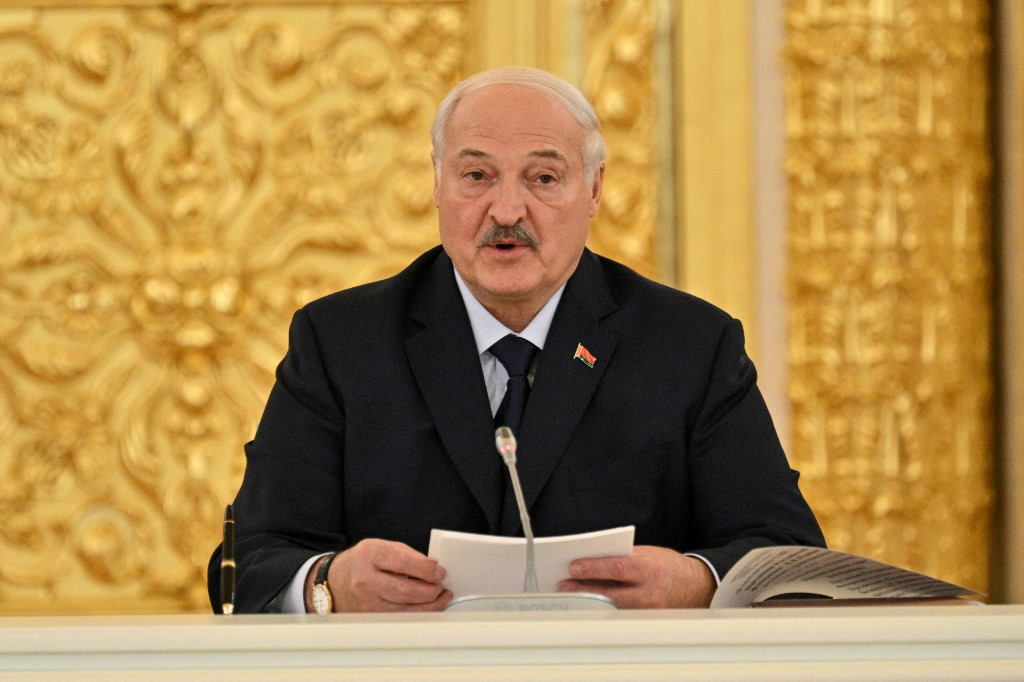
Lukashenko said he is willing to meet Zelensky for direct talks at any point in Ukraine or Belarus and reiterated that Belarus does not intend to enter the war unless its territory is attacked. The article also highlights heightened security measures near the Belarus border and Belarusian-Russian military exercises involving nuclear-related units. Zelensky said Russia may be trying to pull Belarus more directly into the conflict, keeping regional military risk elevated.
The immediate market implication is not a binary “Belarus enters the war” headline, but a rising probability of persistent border militarization that keeps regional risk premia elevated for longer. That matters because even a low-probability direct intervention forces Ukraine to maintain a larger rear-area force posture, which is structurally negative for operating leverage in any recovery trade tied to transport, utilities, and domestic rebuild spending. The bigger second-order effect is on logistics: repeated drills, air-defense deployments, and border security operations can create intermittent rail/road friction that raises delivery risk across Poland-Lithuania-Ukraine corridors without needing actual escalation.
For defense beneficiaries, the signal is better than the noise. Even if Belarus never fully joins the conflict, the market should treat this as another data point supporting a higher steady-state spend regime for European air defense, counter-drone, ISR, and ammunition replenishment over the next 12-24 months. The likely winners are not broad defense indices alone but suppliers with exposure to layered air defense, electronic warfare, and border surveillance; these names benefit whether the scenario is escalation or mere deterrence, because procurement urgency rises in both cases.
The contrarian read is that the most tradable mispricing may be in ignoring benign rhetoric while underpricing coercive utility. Lukashenko’s willingness to talk can be interpreted less as de-escalation than as optionality management: it preserves bargaining leverage with both Moscow and Kyiv while keeping Belarus out of direct kinetic exposure. That lowers the near-term odds of a full Belarusian mobilization, but it does not reduce tail risk; it likely compresses the move from a sharp one-time shock into a slow burn of readiness spending and headline volatility.
AI-powered research, real-time alerts, and portfolio analytics for institutional investors.
Request DemoOverall Sentiment
neutral
Sentiment Score
-0.10
Ticker Sentiment
