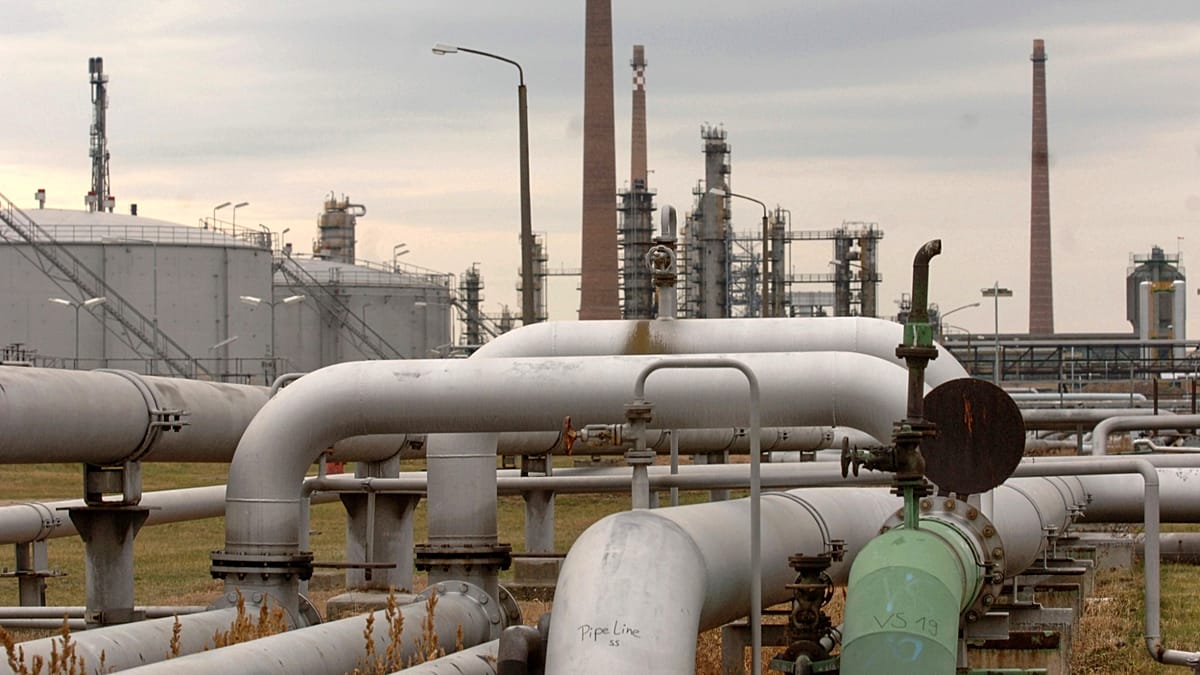
The European Parliament president signed a €90 billion Ukraine support loan on 24 February, but that parliamentary signature is only one step — the package requires changes to EU budgetary rules and unanimous approval by member states, so Hungary’s announced veto can still block final implementation. Budapest ties its objection to a dispute over flows on the Druzhba pipeline (about €137m of Russian crude imports to Hungary and Slovakia in January under an exemption) after reported damage and strikes, raising energy-security and sanctions tensions that have prompted increased Hungarian infrastructure security measures. The standoff threatens both the loan’s approval and a linked EU sanctions package against Moscow, injecting political and energy supply risk into European markets.
Market structure: A delayed €90bn Ukraine loan is a near-term positive for European energy and defense suppliers and alternative crude exporters (seaborne/Black Sea/LNG) while hurting refiners and fiscal-sensitive Eastern European sovereigns dependent on Druzhba flows. If Druzhba remains offline for >30 days, expect regional crude substitution demand of ~100–200kbd, adding $1–3/bbl pressure on Brent and boosting spot physical premia in NW Europe. Pricing power shifts to seaborne sellers and LNG suppliers; EU upstream exposure stays limited but midstream security firms gain bargaining power.
Risk assessment: Immediate (days) — heightened FX and oil volatility; short-term (weeks–months) — CEE sovereign 10y spreads could widen +20–80bps if aid is delayed; long-term (quarters–years) — structural lift to EU defense budgets, implying 5–20% revenue tailwind for prime contractors. Tail risks include a sustained Hungarian veto triggering fiscal shortfalls in Kyiv and escalation that spikes commodity and defense risk premia; hidden dependency: unanimous Council approval is a single-player veto point (Orbán) that can extract non-transparent concessions.
Trade implications: Favor tactical commodity and FX plays to capture volatility, and thematic defense exposure for a multi-quarter re-rating. Cross-asset: long Brent call spreads and EUR put/ USD call structures; buy protection in core sovereigns (Bunds) while shorting vulnerable CEE sovereigns; rotate equity exposure into defense and energy infrastructure names over 3–12 months.
Contrarian angles: Consensus assumes either quick unanimity or full stalemate; the more likely outcome is temporary delay with targeted concessions — a classic 2–3 week volatility event then partial resolution. That implies short-duration, convex trades (options) outperform large directional cash positions; defence equities are under-owned given tempo of EU military policy tightening and may be underpriced by 10–25% vs actual order flow risk.
AI-powered research, real-time alerts, and portfolio analytics for institutional investors.
Request DemoOverall Sentiment
mildly negative
Sentiment Score
-0.25
