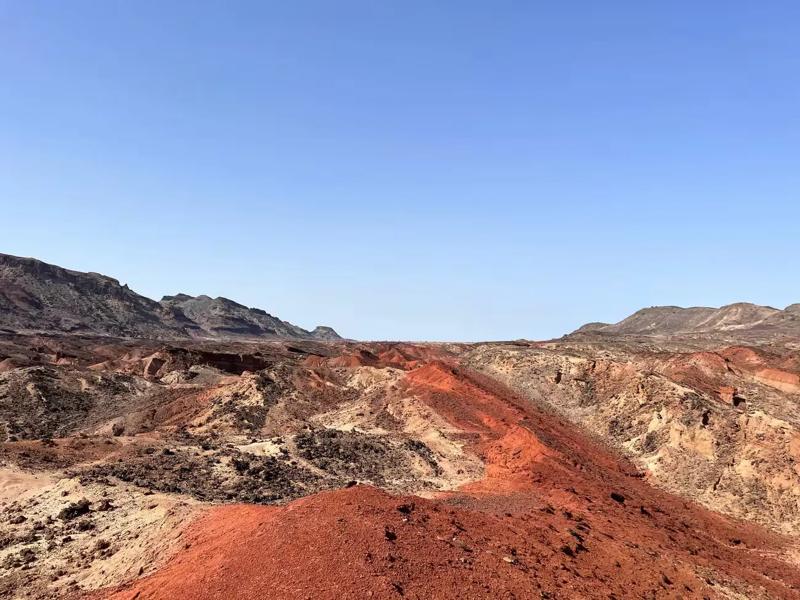
New research suggests the Turkana Rift in eastern Africa is more advanced than previously understood, with crust at the rift center measuring just 13 kilometers deep versus more than 35 kilometers farther away. Scientists say the region is at a critical threshold, but continental breakup is still expected to take millions of years. The article is scientific in nature and has no near-term market implications.
This is not an investable event for listed equities in the near term, but it matters as a slow-burn geopolitics and infrastructure catalyst. A more advanced rift state raises the probability that East African governments and multilateral lenders will prioritize seismic, road, rail, and energy resilience studies earlier than expected, which can redirect capex toward engineering, surveying, and underground utilities over the next 2-5 years. The first-order “winner” is not a commodity or a single country asset, but the ecosystem of firms that monetize subsoil risk assessment and linear infrastructure hardening.
The second-order effect is on optionality: as geologic uncertainty becomes more salient, sovereigns and insurers may demand higher hurdle rates for long-dated projects in the Turkana corridor and adjacent basins. That can compress returns on frontier-market infrastructure concessions and delay greenfield logistics projects, while benefiting incumbent networks in less exposed corridors. If this re-routes capital away from the region, the downside is mostly for local EM banks, construction, and transport names with concentrated Kenya/Ethiopia exposure rather than global cyclicals.
The contrarian read is that the market will likely over-discount the timeline risk while underpricing the resilience spending cycle. A continental split is a multi-million-year story, but incremental recognition of thinner crust can accelerate permitting, monitoring, and public-works budgets well within normal investment horizons. In other words, the tradable signal is not “Africa breaks apart,” but that governments may spend earlier on engineering adaptation than consensus expects, creating a small but real beneficiary set in geotech and infrastructure services.
Tail risk is a regional shock: if new data is interpreted as elevating seismic or ground-instability risk, it could briefly hit local property, transport, and project-finance sentiment. However, that would likely be a fadeable move unless corroborated by near-term tremor activity; the scientific timeline itself is too long to justify a durable macro trade. Best viewed as a thematic input to EM infrastructure due diligence rather than a catalyst-driven market event.
AI-powered research, real-time alerts, and portfolio analytics for institutional investors.
Request DemoOverall Sentiment
neutral
Sentiment Score
0.00
