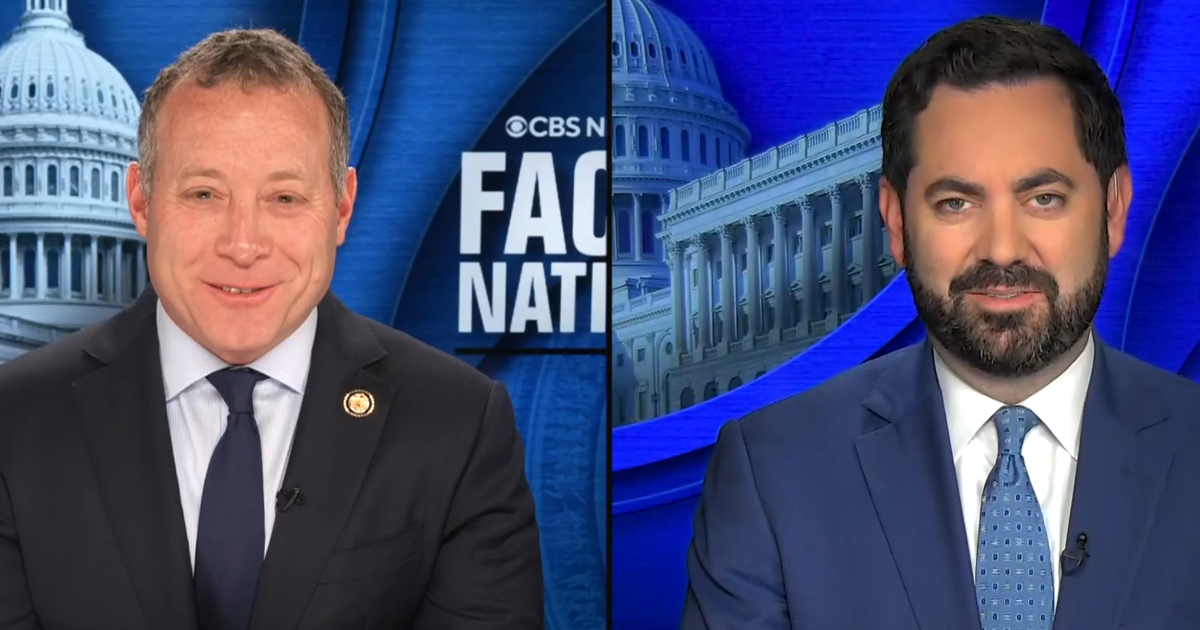
The interview centered on a reported US-Iran memorandum of understanding, with lawmakers saying any agreement must prevent Iran from obtaining a nuclear weapon while potentially reopening the Strait of Hormuz, a move that could lower gas prices. The discussion also touched on war powers, IRS settlement issues involving the Trump family, and bipartisan efforts to combat rising antisemitism in the US. Market relevance is elevated because developments around Iran and the Strait of Hormuz can affect energy prices and broader geopolitical risk.
The market is likely underpricing the difference between a symbolic de-escalation and a durable security architecture. Any reopening of maritime flows is an immediate macro positive for global energy-sensitive sectors, but the bigger second-order effect is reduced tail-risk premium in freight, insurance, and refined product pricing, which can compress volatility across Europe and Asia even if the nuclear file remains unresolved. That argues for a fast, tactical bid in cyclical beneficiaries rather than a blanket move into long-duration “peace trade” assets.
The more important risk is that this becomes a partial deal with reversible components: shipping access and sanctions relief can move quickly, while enrichment constraints, inspections, and proxy network suppression are far slower to verify and much easier to unwind. If enforcement is weak, the market could initially reward lower crude and then reprice higher on renewed skepticism within 4-12 weeks as traders focus on implementation gaps. That creates an asymmetric setup: sell the first relief rally in energy, but stay positioned for headline-driven volatility.
Domestically, the bipartisan antisemitism push is less about immediate legislative probability than about platform signaling into the 2026 cycle. The second-order effect is greater reputational risk for candidates and universities/NGO-adjacent institutions that tolerate extremist language, which can move funding and donor behavior before it moves votes. The contrarian point: consensus may be too focused on the foreign-policy optics and not enough on how quickly this translates into sector rotation via lower fuel costs, reduced geopolitical beta, and a modest unwind of defense-adjacent premium.
AI-powered research, real-time alerts, and portfolio analytics for institutional investors.
Request DemoOverall Sentiment
neutral
Sentiment Score
0.05
