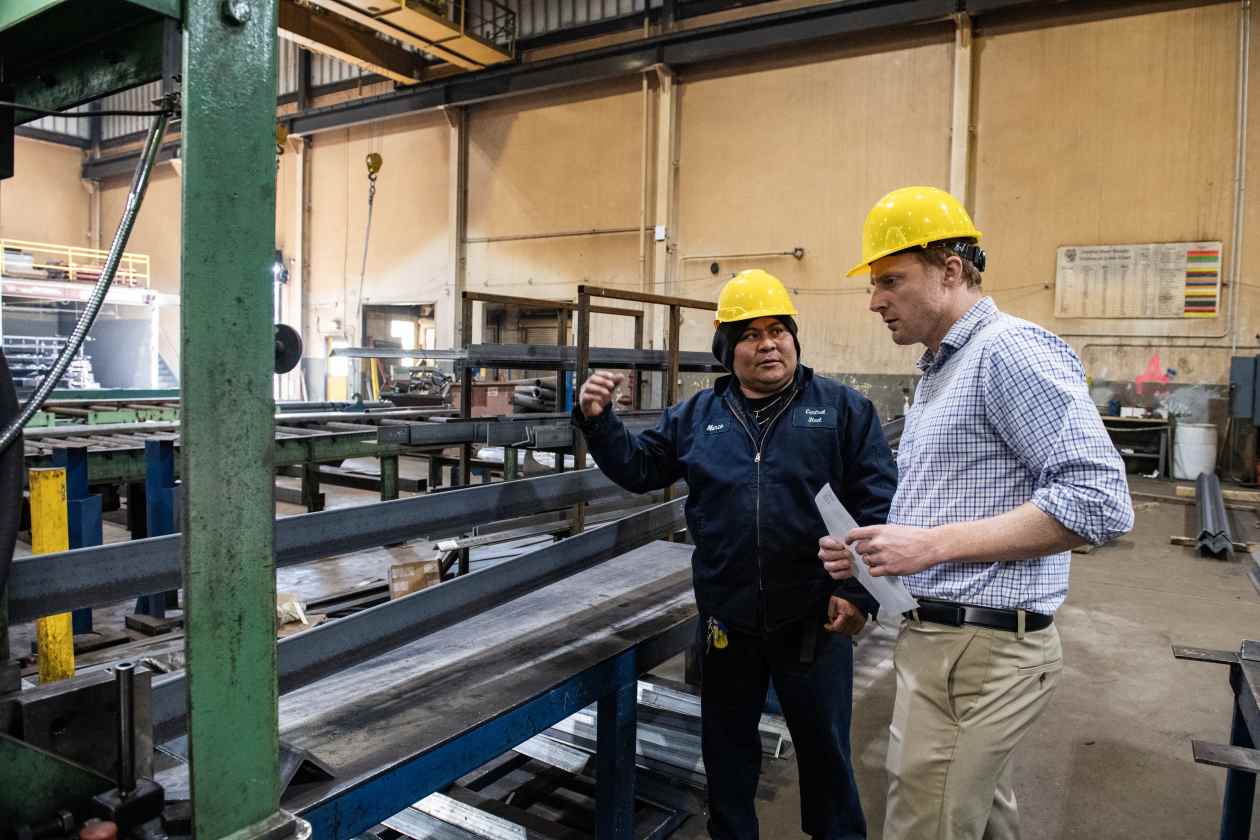
President Trump's 50% tariffs on steel and aluminum imports have taken effect, increasing costs for manufacturers and potentially consumers, with the Can Manufacturers Institute warning of higher prices for canned goods. These tariffs, along with existing levies, have pushed the average U.S. tariff rate to approximately 15%, the highest since 1938. While sector-based tariffs remain in place due to different legal mechanisms, tariffs on other countries are subject to court challenges, creating uncertainty despite some appellate rulings favoring the tariffs; the S&P 500 was little changed on Wednesday.
The U.S. has escalated trade protectionism with 50% tariffs on imported steel and aluminum now effective, an increase from the 25% duty in place since March, contributing to an average U.S. tariff rate estimated at 15% – the highest level recorded since 1938. This policy directly pressures industries reliant on these metals, with organizations like the Can Manufacturers Institute warning of resultant higher costs for canned goods, which could affect consumer prices and impact millions of American families. While broad global tariffs have faced legal challenges, recently blocked and then reinstated by appellate courts, sector-specific tariffs, justified under national security (Section 232 of the Trade Expansion Act of 1962) and unfair trade practice (Section 301 of the Trade Act of 1974) provisions, remain firmly in place and may see expanded use. Further uncertainty persists for various sectors: automobiles and auto parts are subject to a 25% tariff, while technology firms like Apple (AAPL) and Samsung face a potential 25% levy on non-U.S. manufactured smartphones by the end of June. Tariffs on goods from China (currently 30% during negotiations, down from 145%), Canada, and Mexico (25% with USMCA exemptions), and other partners including the E.U. (facing 10% with a potential 50% levy for the E.U. deferred to July 9) are also active despite ongoing legal reviews and specific exemptions, such as for U.K. steel and aluminum under a May trade deal. Despite these significant trade developments and a strongly negative sentiment signal (-0.7) associated with the news, the S&P 500 index (SPY) showed minimal change on Wednesday, the day these latest steel and aluminum tariffs took effect, maintaining a modest year-to-date gain of approximately 1.5%, following a rally since an April 9 partial tariff retreat.
AI-powered research, real-time alerts, and portfolio analytics for institutional investors.
Request DemoOverall Sentiment
strongly negative
Sentiment Score
-0.70
Ticker Sentiment
