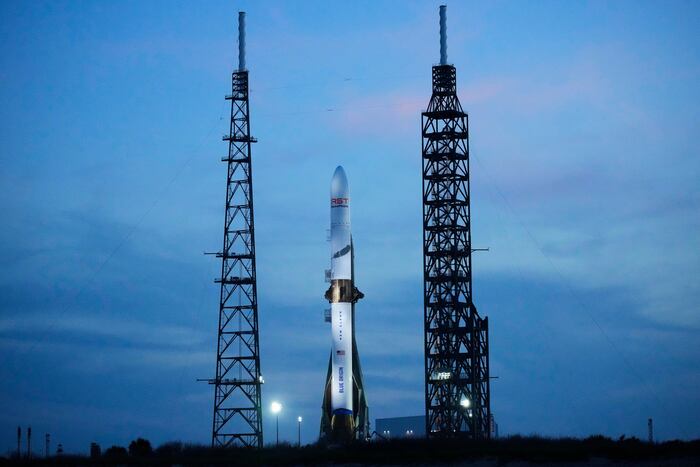
Blue Origin's New Glenn rocket exploded during an engine-firing test at Cape Canaveral ahead of a planned satellite launch next week, with no injuries reported. The incident delays a key launch vehicle that has already been grounded once this year after an earlier engine failure, and could affect upcoming NASA-related lunar missions and Amazon Leo satellite deployments. Officials said nearby launches by other companies should not be impacted.
This is less a one-off headline than a signal that Blue Origin’s heavy-lift cadence is still fragile, which matters because the investment case for AMZN’s space optionality depends on moving from “capable” to “repeatable.” The second-order issue is schedule slippage: each reset compresses downstream milestones for lunar hardware, government credibility, and satellite deployment economics, turning a launch provider into a project-risk variable for its customers. In practice, the market should discount any near-term revenue contribution from New Glenn-related activity until the company proves consecutive clean test/launch cycles.
Competitive dynamics favor SpaceX and, to a lesser extent, legacy launch providers with more mature execution records. If Blue Origin stumbles, customers with time-sensitive payloads will route around it, which strengthens incumbent pricing power and raises the hurdle rate for new entrants across the supply chain. The bigger beneficiaries may be aerospace subsystems suppliers with diversified customer exposure, because platform-specific failures tend to increase qualification scrutiny and multi-sourcing demand.
From a risk perspective, the immediate damage is reputational, but the real P&L risk sits over the next 6-18 months: Artemis-related awards and commercial manifest wins can be delayed, repriced, or reallocated if management cannot demonstrate reliability quickly. The key reversal catalyst is a fast, transparent root-cause fix followed by an unambiguous success on the next attempt; absent that, the narrative shifts from “developmental volatility” to “structural execution discount.” The market is probably underpricing the option value destruction from repeated anomalies because the obvious downside is visible while the lost future launches are not.
Contrarian view: the selloff in AMZN should be limited because Blue Origin remains non-core to near-term Amazon earnings, and the event may even strengthen Amazon’s own launch urgency if it needs self-reliant satellite logistics. So the cleaner expression is not a broad short AMZN, but a relative-value trade against peers exposed to launch bottlenecks or against beneficiaries of launch replacement demand. Watch for any evidence that satellite customers and NASA start diversifying away from Blue Origin, as that would be the first real sign this becomes a longer-duration strategic impairment rather than a single setback.
AI-powered research, real-time alerts, and portfolio analytics for institutional investors.
Request DemoOverall Sentiment
mildly negative
Sentiment Score
-0.35
Ticker Sentiment
