

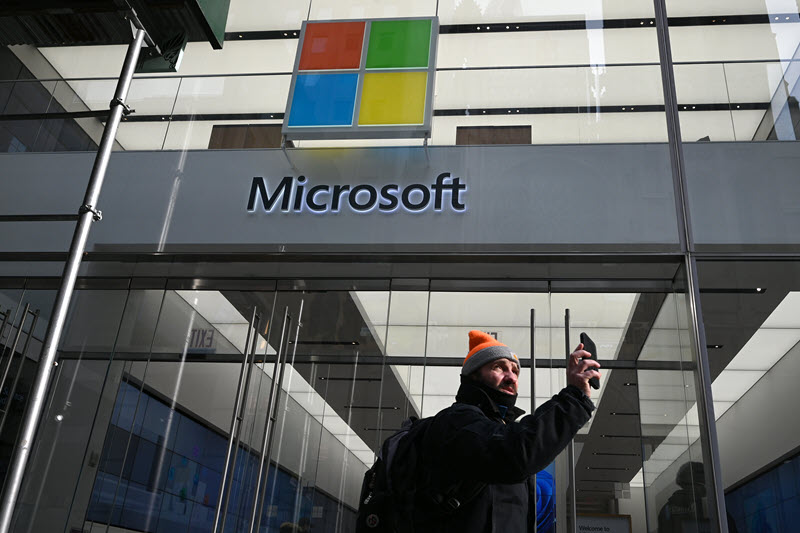
KeyBanc reiterated an Overweight rating on Microsoft with a $600 price target, citing strong execution, 16.7% revenue growth over the last twelve months, and improving customer spending trends around Azure and Copilot. The survey showed 85% of respondents expect to increase Azure spending and nearly half have already rolled Copilot into production, supporting a positive AI and cloud demand backdrop. The article also notes Microsoft is in late-stage talks for a five-year memory supply agreement with SK Hynix, which would help secure data center expansion capacity.
The incremental setup is not just better AI demand for MSFT; it is tighter supply discipline across the AI infrastructure stack. If hyperscalers are now competing to lock in multi-year memory supply, pricing power shifts upstream to SK Hynix/Samsung and away from cloud buyers, which can temporarily compress data-center ROI but ultimately raises the barrier to entry for smaller AI challengers. That dynamic should widen the execution gap between the platform incumbents and everyone trying to catch up on inference capacity.
For MSFT, the more important signal is that enterprise Copilot adoption is moving from pilot optics to budget-line-item behavior. Once rollout crosses roughly half of survey respondents, usage tends to become sticky through renewal cycles, which means the revenue impact lags the sentiment improvement by several quarters but is more durable than model-training hype. The second-order winner is Azure infrastructure monetization: better AI workload security adoption suggests customers are moving critical workloads, not just experimenting, which supports sustained capex even if broader cloud spend normalizes.
GOOGL is the understated beneficiary and the likely relative-value trade. If it is forced into similar memory commitments, the immediate effect is higher working-capital intensity and lower flexibility, but the strategic effect is to prevent Microsoft from monopolizing supply optionality. The consensus may be underestimating how much of this is a procurement race rather than a demand race; in that setup, the short-term winner is whichever company can prepay capacity without missing pricing discipline, while the loser is the one that needs spot supply later in the cycle.
The main reversal risk is that the market treats memory supply deals as a bullish demand signal and bids the whole AI complex higher before the economics are visible. If memory pricing rolls over in 6-12 months, minimum-price protections preserve supplier margins but delay hyperscaler payback, creating a temporary multiple headwind for MSFT/GOOGL even if top-line growth holds. Near term, the catalyst is not revenue surprise but commentary on capex duration and supply availability; that will determine whether the AI trade expands or starts to bifurcate into winners and financing-sensitive laggards.
AI-powered research, real-time alerts, and portfolio analytics for institutional investors.
Request TrialOverall Sentiment
mildly positive
Sentiment Score
0.35
Ticker Sentiment
