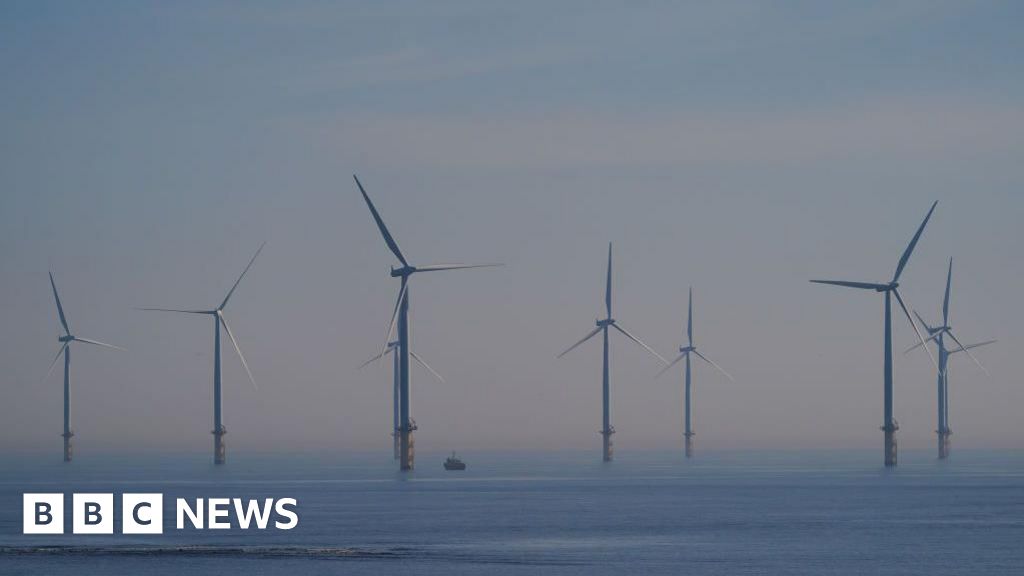
The UK awarded contracts securing 8.4GW of offshore wind capacity (contracts fixed for 20 years) including first-phase Berwick Bank, Dogger Bank South, Norfolk Vanguard and Welsh project Awel y Môr, aiming to help reach a 43GW offshore target by 2030. Average strike prices for fixed seabed projects were ~£91/MWh (2024 prices) versus a government-estimated £147/MWh cost for new gas (including carbon), but analysts warn rising supply-chain costs, steel prices and interest rates make getting these projects online by 2030 “extremely challenging” and could affect household bills and grid upgrade costs.
Market structure: The 8.4GW award (20-year contracts at ~£91/MWh vs estimated new‑gas £147/MWh) crystalises a multi‑decade revenue stream for offshore developers, transmission owners and turbine/supply‑chain OEMs (Ørsted, Vestas, Siemens Gamesa, National Grid and steel/cable suppliers). Winners: regulated grid owners (stable RAB returns) and large cap developers with balance‑sheet scale to absorb capex inflation. Losers: merchant gas peakers (commercial margins compressed over 2030 horizon) and smaller developers facing refinancing risk if cost curves rise.
Risk assessment: Tail risks include regulatory re‑pricing of contracts (political backlash pre‑election), seabird/consenting litigation delaying projects, and supply‑chain/steel price spikes that can push IRRs negative — a 10–20% capex overrun could make some projects uneconomic. Immediate (days): muted equity reaction; short (weeks–months): developer bond & equity dispersion as auctions are priced; long (years to 2030): grid connection bottlenecks (UK needs ~6.3GW more to hit 43GW) drive schedule risk and returns.
Trade implications: Favor regulated transmission and large, investment‑grade developers able to absorb cost inflation (NG.L, ORSTED.CO, SSE.L) and select turbine suppliers (VWS.CO). Short discretionary exposure to UK gas generators/retailers with high merchant risk (CNA.L) via 6–12 month outright shorts or buying protective puts. Use pair trades (long NG.L, short CNA.L) to isolate renewable vs merchant generation exposure; prefer 9–18 month call spreads on NG/SSE to cap premium while capturing regulated upside.
Contrarian angles: The market underestimates grid/connectivity and consenting delays — implying near‑term delivery risk and a two‑year re‑rating window for developers if projects slip. Conversely, if interest rates fall and steel/cable costs retreat 10–15% by H2 2026, contracts at £91/MWh become markedly more valuable; look for mispriced LEAPs and bonds of solid developers trading at credit spreads >200bp vs sovereigns as takeover/funding-arbitrage opportunities.
AI-powered research, real-time alerts, and portfolio analytics for institutional investors.
Request DemoOverall Sentiment
mixed
Sentiment Score
0.05
