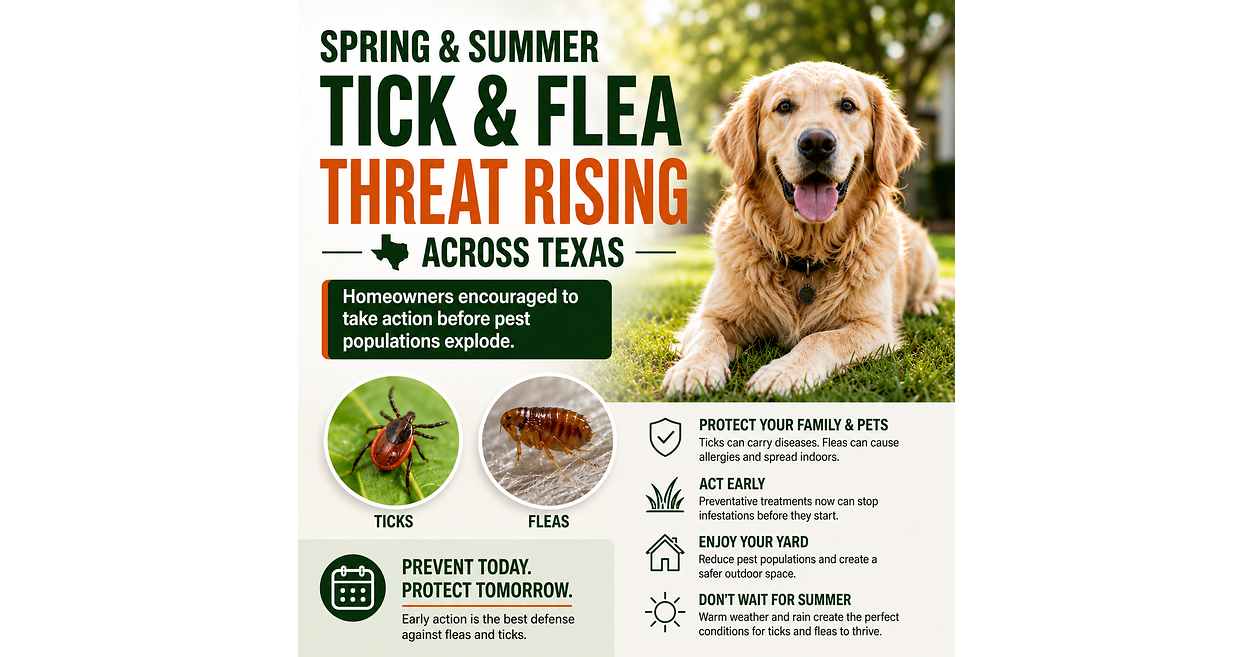
The article is a pest-control promotional warning to Texas homeowners to begin preventive flea and tick treatments as warmer, wetter summer conditions increase pest activity. It highlights that infestations can spread quickly and may move onto pets and indoors if treatment is delayed. No financial figures, policy actions, or market-relevant company performance updates are provided.
This reads as a localized seasonal demand reminder, not an investable event. The public-market read-through is limited because pest control is already a recurring, weather-aware category; incremental awareness usually converts to bookings only if humidity persists and branch-level service capacity can absorb it. The bigger mechanism is not top-line surprise but mix: higher attachment rates for preventive plans and potentially better route density for scaled operators.
The cleanest public proxies are ROL and RTO on the service side, and ZTS/ELAN on pet-parasite preventatives. Even there, the impact is second-order and likely shows up over 1-2 quarters, not in the next few sessions. A warmer/wetter Texas pattern can help volumes, but if it drives re-treatments, labor intensity and vehicle costs can offset some of the margin benefit.
The contrarian risk is that consensus overweights weather headlines and underweights consumer substitution. Many households simply delay treatment or buy OTC products at HD/LOW before upgrading to subscription service, so the total addressable spend may not expand much. Falsifier for a bullish read would be no acceleration in recurring service revenue or pet-preventative sell-through by late summer despite continued heat and moisture.
AI-powered research, real-time alerts, and portfolio analytics for institutional investors.
Request DemoOverall Sentiment
neutral
Sentiment Score
0.00
