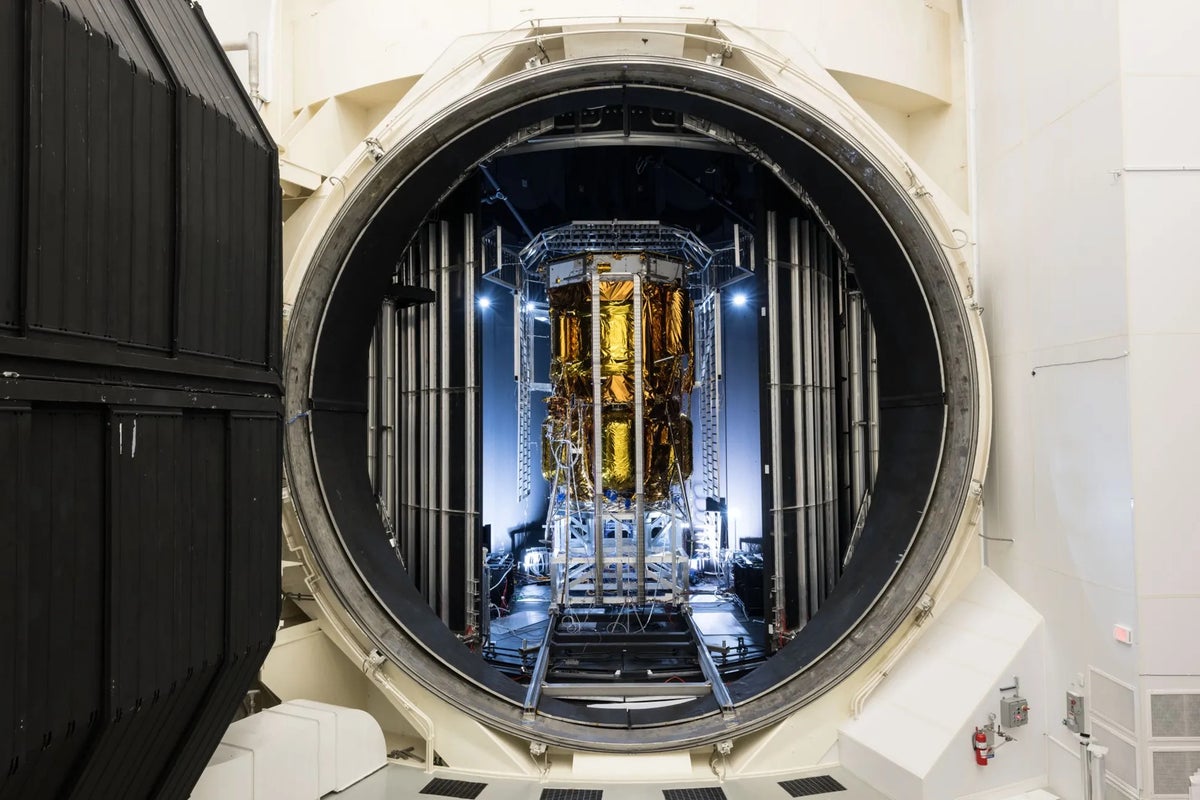
Blue Origin’s Endurance (Blue Moon MK1) lunar lander completed vacuum-chamber testing at NASA’s Johnson Space Center, a key step toward a possible launch later this year on the company’s New Glenn rocket. The lander is designed to carry up to 3 metric tons of cargo to the Moon and supports NASA’s CLPS and Artemis programs. NASA also plans to use the vehicle for its CT-3 science mission, while test data will inform development of the larger Blue Moon MK2 crewed lander.
This is more meaningful as a validation event for the commercial lunar supply chain than as a single company milestone. If Blue Origin clears launch and mission ops, it strengthens the investability of lunar logistics, where the near-term winner is the contractor with the most credible path to recurring CLPS-style cadence rather than the one with the flashiest flagship crew vehicle. The second-order benefit accrues to the broader aerospace industrial stack: thermal systems, avionics, cryogenics, payload integration, and range services should all see a longer procurement runway if lunar demonstrations keep converting into funded missions.
The key inflection is not the chamber test itself but whether Blue Origin can compress its schedule from ground qualification to repeated flight success on New Glenn within months, not years. A clean Pathfinder launch would de-risk the company’s ability to bid for higher-value NASA task orders and improve the probability that MK2 remains a viable Artemis option; a failure would likely re-rate expectations across the entire non-SpaceX lunar lander cohort because NASA typically rewards demonstrated reliability over theoretical capability. That means the market should treat this as a binary catalyst with a relatively short feedback loop: the next 1-2 launches matter much more than the technical milestones behind them.
The contrarian read is that investors may be over-anchored on the Artemis crewed lander narrative while underpricing the cash-flow implications of cargo delivery. Payload delivery contracts are smaller per mission, but they establish utilization, heritage, and data rights that compound into future bids; in other words, the real option value sits in operational cadence, not one-off headline missions. If Blue Origin can turn MK1 into a repeatable platform, it could create a credible multi-year backlog expansion story even before crewed lunar transport is settled.
Tail risk remains schedule slippage and one early flight anomaly, which would likely delay the entire learning curve by 6-12 months and push commercial lunar revenue further out. A more subtle risk is NASA mix-shift: if Starship continues to progress faster, Blue Origin may win validation but still lose the dominant share of future lunar spend. For investors, this argues for expressing the thesis through the enabling industrial and launch infrastructure names rather than betting solely on Blue Origin execution.
AI-powered research, real-time alerts, and portfolio analytics for institutional investors.
Request DemoOverall Sentiment
mildly positive
Sentiment Score
0.25
