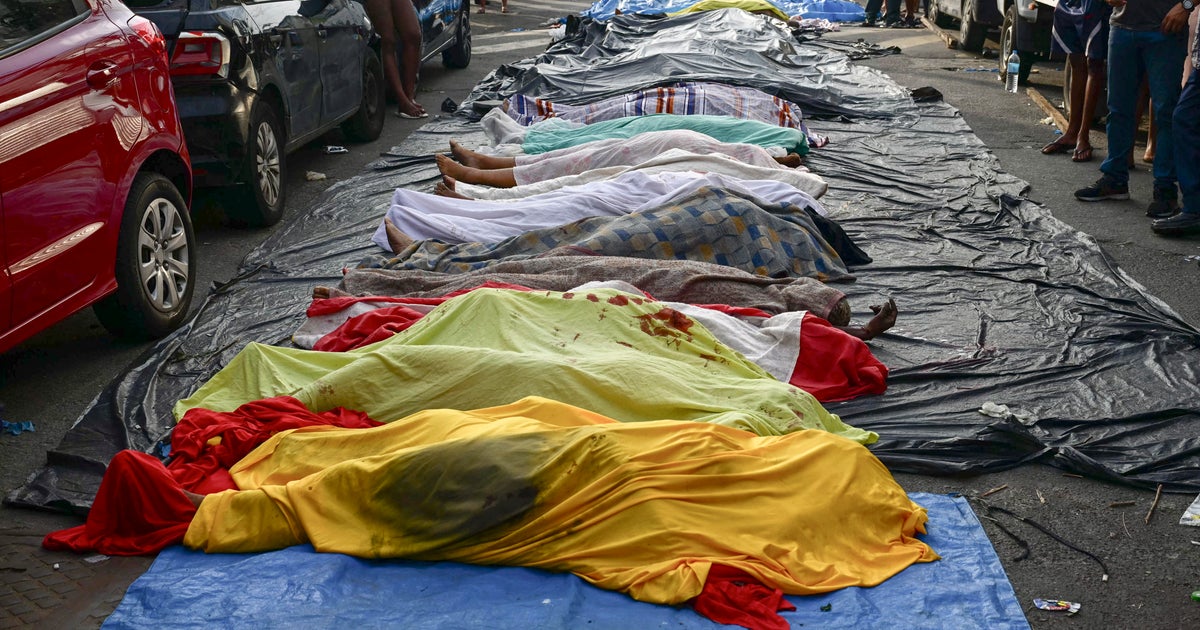
A recent police operation in Rio de Janeiro, Brazil, against the Red Command drug trafficking gang resulted in 121 deaths, prompting President Lula to call for an investigation into what he termed a 'massacre.' This event highlights Brazil's persistent security challenges and the government's efforts to combat organized crime, including a proposed bill for minimum 30-year sentences for gang members. The significant scale of violence and the political response underscore ongoing governance and rule-of-law concerns that could influence the nation's political stability and broader investment climate.
The recent police operation in Rio de Janeiro against the Red Command drug trafficking gang resulted in 121 fatalities, prompting Brazilian President Luiz Inacio Lula da Silva to label it a "massacre" and call for an investigation. This significant death toll underscores the severe and violent nature of organized crime in Brazil, with the Red Command actively reclaiming territory and utilizing advanced tactics like drone-dropped explosives.
In response to the escalating violence and amid criticism regarding his administration's stance on crime, President Lula has proposed legislation for a minimum 30-year prison sentence for gang members. While rights activists have condemned the operation's aftermath, surveys indicate considerable public support among crime-weary citizens, highlighting deep societal divisions on security approaches.
Despite a neutral sentiment and low immediate market impact score, this event exposes Brazil's chronic security challenges and governance issues, particularly concerning rule of law and political stability. The incident, coupled with the government's legislative response, could influence the broader investment climate by signaling persistent operational risks and potential shifts in domestic policy.
AI-powered research, real-time alerts, and portfolio analytics for institutional investors.
Overall Sentiment
neutral
Sentiment Score
0.00
