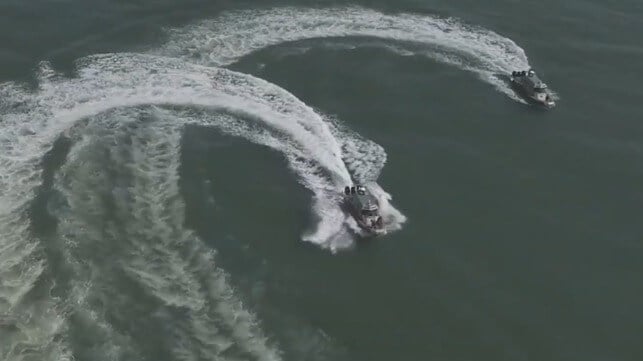
Three Pakistan Coast Guards were killed in an attack near the Iranian maritime border, marking an escalation of separatist violence into the maritime domain. The Balochistan Liberation Army claimed responsibility, and authorities say an investigation is under way while patrols have been increased. The incident heightens security risks in Balochistan, where Chinese CPEC projects and personnel have already faced repeated attacks.
This is less about one attack and more about a regime change in perceived security along a corridor that was previously treated as a land-based insurgency problem. Once violence migrates into the maritime perimeter, the market has to reprice not just physical security costs but the optionality of delay: port throughput, contractor mobilization, and insurance all become more expensive even if cargo disruption is limited. The immediate read-through is negative for any China-linked buildout in Pakistan because the marginal cost of protection rises faster than the economic return on the next tranche of capex.
The second-order effect is that Beijing’s tolerance threshold matters more than Islamabad’s response. If China decides existing protection is inadequate, project timelines can slow without an outright cancellation, which is the worst case for local execution but the best case for headline risk persistence. That creates a months-long overhang on construction and logistics names exposed to CPEC, while also encouraging a heavier security footprint that raises the fiscal burden on Pakistan without improving investor confidence.
The contrarian point is that markets may overstate the probability of durable maritime disruption. Small-scale coastal attacks can be operationally noisy but strategically contained if the state concentrates assets around key nodes; in that case, the trade is not a collapse in trade flows but a wider spread between promised and delivered project milestones. The more interesting risk is escalation from symbolic attacks to repeated insurance-triggering incidents, which could force routing changes, higher war-risk premiums, and slower contractor deployment over the next 3-6 months rather than an immediate shock.
AI-powered research, real-time alerts, and portfolio analytics for institutional investors.
Request DemoOverall Sentiment
strongly negative
Sentiment Score
-0.65
