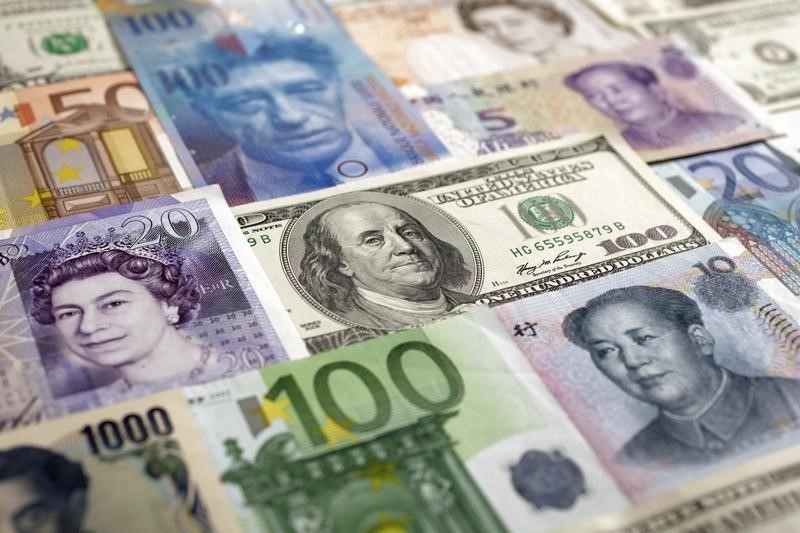
Goldman Sachs says diverging macro data and higher-for-longer energy prices are strengthening the U.S. dollar, with the DXY gaining on concerns over prolonged energy disruptions and weaker European and Asian currencies. Bank Indonesia raised rates by 50 bps to 5.25% to defend the rupiah, while Goldman expects the Bank of Korea, RBI, and Taiwan's central bank to tighten later this year. The article points to broad FX and policy spillovers from energy-flow disruptions through the Strait of Hormuz.
The market is increasingly treating the Dollar as the marginal beneficiary of global supply-side stress, not just a U.S. growth story. That matters because the next leg of FX performance is likely being driven by relative policy reaction functions: countries facing imported energy inflation and capital leakage are forced into tighter policy even as growth weakens, which can extend USD strength well beyond what rate differentials alone would imply.
The second-order winner is U.S. large-cap growth with global revenue exposure only if the stronger dollar does not re-price discount rates too sharply. AI-heavy names like SMCI and APP can still absorb a firmer USD if their demand is tied to domestic capex and software/adtech budgets, but they become more fragile if higher-for-longer energy costs start squeezing enterprise margins and delaying data-center buildouts. The more vulnerable set is EM financials, domestic consumer names, and any exporter dependent on local-currency pricing power; they face both funding stress and weaker real demand.
The underappreciated risk is that this becomes a slow-moving policy squeeze rather than a one-off FX move. If energy disruptions persist for 1-3 months, the relevant trade is not just dollar strength but lower regional earnings revisions across Europe and Asia, plus pressure on reserve managers to defend currencies through tighter liquidity. Conversely, the consensus may be overestimating how linear the dollar upside is: once central-bank intervention becomes synchronized, the move can flatten quickly, especially if commodity flow headlines stabilize or U.S. data softens enough to revive rate-cut expectations.
AI-powered research, real-time alerts, and portfolio analytics for institutional investors.
Overall Sentiment
neutral
Sentiment Score
-0.10
Ticker Sentiment
