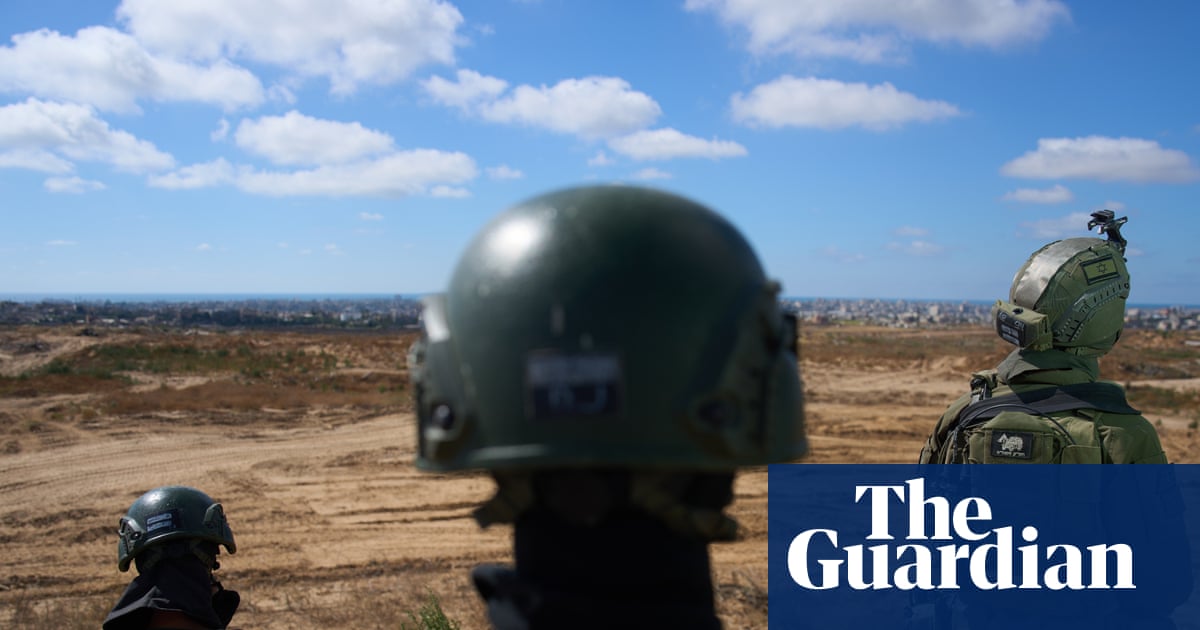
Netanyahu said Israel has been ordered to expand control of Gaza to 70%, up from the 53% line established under the October US-brokered ceasefire and 60% currently claimed by Israel. The move would directly violate the ceasefire framework and Trump’s peace plan, intensifying fears of renewed conflict and worsening humanitarian conditions for Gaza’s 2.2 million residents. The article also reports more than 900 Palestinian deaths since the truce began, continued military advances, and growing use of Israeli-backed militias to clear territory near the yellow line.
The market-relevant issue is not just renewed conflict risk; it is the collapse of the policy architecture that was supposed to cap tail risk. If the ceasefire framework is effectively dead, the probability of a longer-duration military occupation regime rises, which mechanically pushes reconstruction timelines out and shifts the region from a short-dated political risk event into a multi-quarter humanitarian and legal quagmire. That matters because any hope of normalization premium in local assets, shipping routes, or regional project finance becomes much harder to underwrite.
Second-order effects are broader than Israel/Gaza headlines. A sustained expansion of control increases the odds of retaliatory activity, regional proxy escalation, and adverse headline spillovers into Egypt, Jordan, and Lebanon risk premia, while also raising legal exposure for firms tied to security, logistics, or rebuilding contracts if governance legitimacy erodes further. The biggest economic loser is likely the reconstruction complex itself: the more territory is rendered inaccessible or uninhabitable, the more donor commitments become politically toxic and the more likely capital is delayed rather than deployed.
The contrarian angle is that markets may be underpricing the duration of this stalemate because they continue to assume eventual phased de-escalation. But the more immediate risk is a nonlinear humanitarian shock that triggers diplomatic intervention, sanctions talk, or a forced reset of the ceasefire terms, any of which can reverse positioning quickly within days. The right lens is not ‘peace process’ but ‘delayed capex plus elevated event-risk volatility’ over the next 1-3 months.
AI-powered research, real-time alerts, and portfolio analytics for institutional investors.
Request DemoOverall Sentiment
extremely negative
Sentiment Score
-0.90
