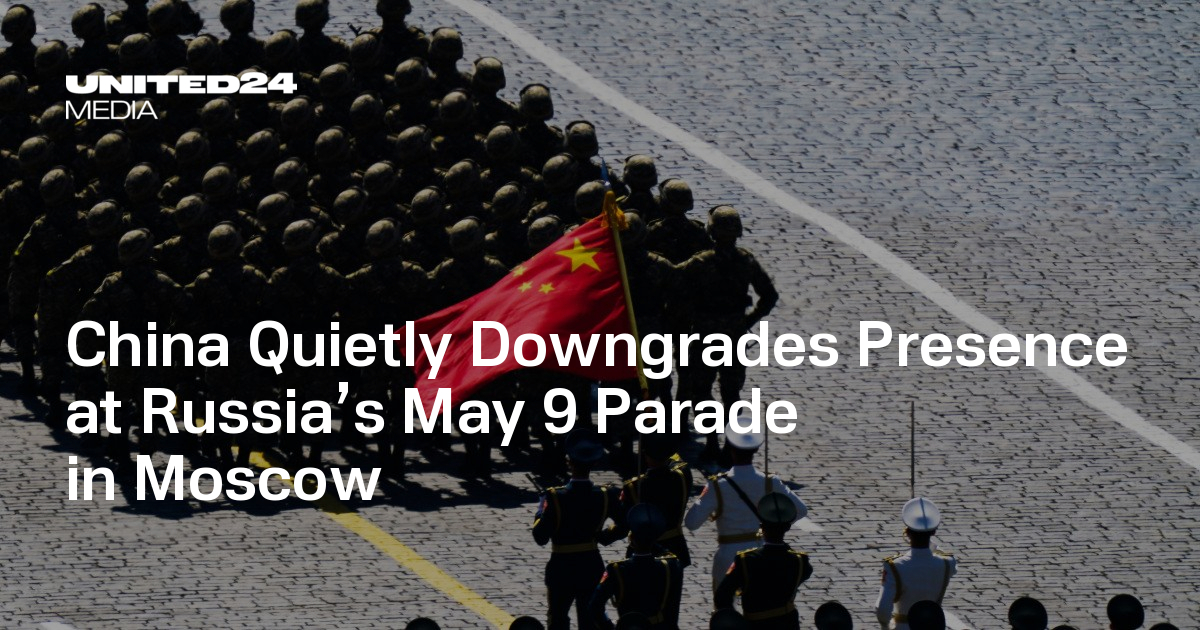
China will not send a special government delegation to Moscow for Russia’s May 9 Victory Day parade; only embassy officials are expected to attend. The article also notes limited foreign participation, heightened security restrictions in Moscow, and reports of Russia pulling combat-capable troops from the front to support the event. The piece is primarily geopolitical and does not present a direct market catalyst, though it underscores continued wartime pressures on Russia.
China’s refusal to elevate its presence in Moscow is a subtle but meaningful signal that Beijing is widening the gap between rhetorical support for Russia and transactional alignment. The market implication is not immediate sanctions escalation, but a lower ceiling on how far China is willing to underwrite Russia’s war economy if secondary-sanctions risk to Chinese banks, insurers, or logistics firms rises. That makes this more relevant for RMB settlement channels, shadow trade finance, and state-linked commodity flows than for any single headline event.
The bigger second-order effect is on Russia’s bargaining position. A thinner international turnout reduces the Kremlin’s ability to use the parade as proof of diplomatic resilience, which matters because symbolic legitimacy has become a tool for domestic regime management during wartime strain. If Moscow is simultaneously pulling combat-capable personnel and constraining domestic infrastructure around the event, the parade becomes a visible reminder of resource diversion; that can marginally worsen operational readiness at the front and increase near-term battlefield volatility over the next 1-3 weeks.
For markets, this reinforces a medium-term bearish view on Russian risk assets and adjacent EM exposures tied to Russian transit, financing, or commodity settlement. The contrarian read is that Beijing may be optimizing for optionality rather than distancing itself: it can preserve leverage over Moscow while avoiding an overt political gesture that would invite more scrutiny. In that case, the headline is less a pivot away from Russia than evidence that China is becoming more selective, which is actually negative for Russia because selective support is less useful than broad diplomatic cover.
AI-powered research, real-time alerts, and portfolio analytics for institutional investors.
Request DemoOverall Sentiment
neutral
Sentiment Score
-0.05
