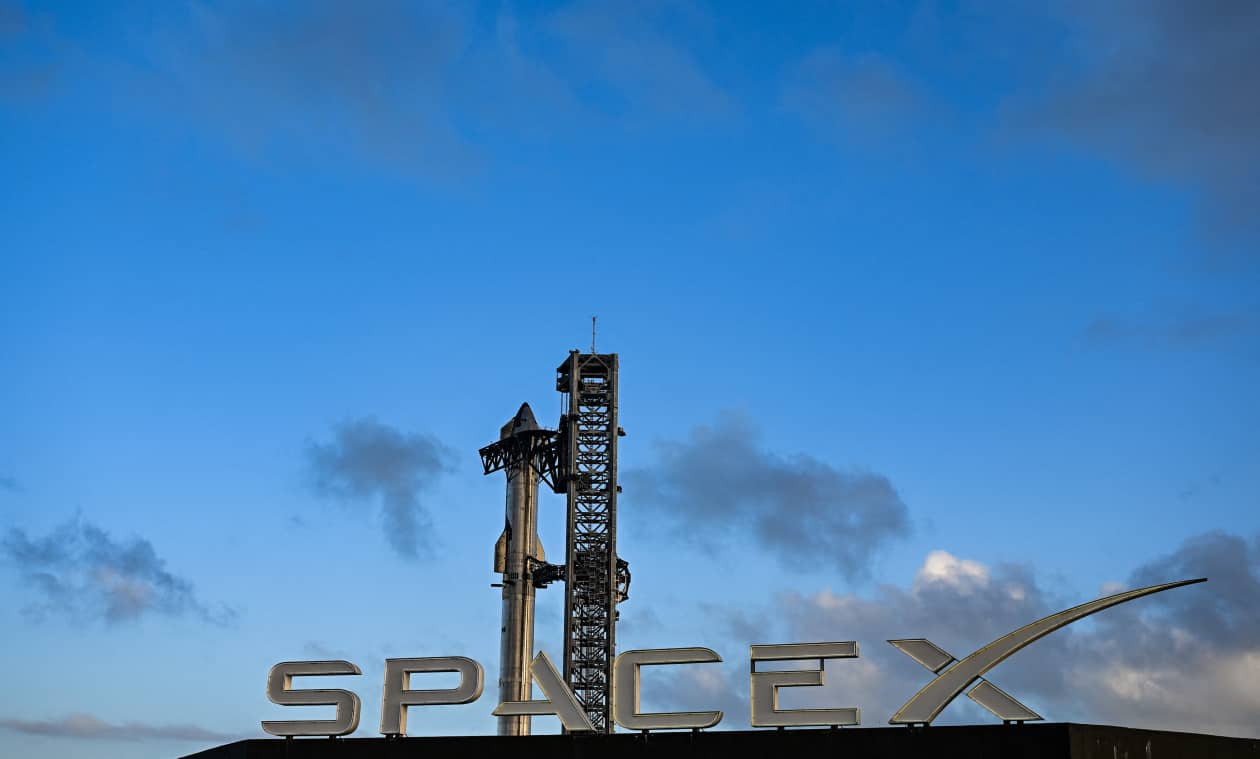
Investment in the space economy hit a record $36 billion in Q1, up sharply from $6.7 billion a year earlier and above the prior quarterly high of $26.4 billion in Q2 2025. The article highlights rising enthusiasm for space-related assets, driven by Elon Musk/SpaceX IPO speculation, a moon mission, and space-based data centers. The tone is broadly bullish for the sector, though the piece is more about capital flows and sentiment than an immediate tradable catalyst.
The first-order read is that capital formation is becoming the trade itself: when a sector prints a multi-quarter funding record, the near-term winners are not necessarily the launch names but the picks-and-shovels that monetize activity regardless of which platform ultimately wins. That favors satellite component suppliers, ground-station software, RF testing, and launch-adjacent industrials with high mix of recurring revenue, because private-market dollars tend to translate into hiring, prototyping, and procurement before revenue inflects.
Second-order, the surge likely compresses financing spreads across the ecosystem and pulls forward vendor commitments, but it also raises the bar for eventual public-market returns. A lot of this capital will chase overlapping business models with long commercialization cycles; in 12-24 months, we should expect a sharper bifurcation between firms with defense/telecom contracts and those selling pure future narratives. If rates stay high, the market may reprice duration risk in space ventures faster than venture dollars can paper over it.
The contrarian point is that record private investment can be a late-cycle signal as much as a growth signal. When capital is abundant, incumbents can overbuild capacity, inflate customer acquisition costs, and bid up talent and launch infrastructure; the most obvious beneficiaries often become the most crowded trades. The cleanest upside may therefore be in enablers with near-term cash generation, while the highest beta space-exposure names remain vulnerable if the IPO window opens and secondary supply hits the tape.
Catalyst-wise, the next 3-6 months matter more than the next 3-6 years: any credible IPO timetable, major government contract awards, or evidence that space-based data-center economics are real rather than promotional would extend the rally. Conversely, a weak debut from the first major space listing, or a delay in flagship missions that were part of the narrative, could quickly cool sentiment and expose how much of the recent funding surge was momentum-driven rather than fundamental.
AI-powered research, real-time alerts, and portfolio analytics for institutional investors.
Request TrialOverall Sentiment
moderately positive
Sentiment Score
0.58
