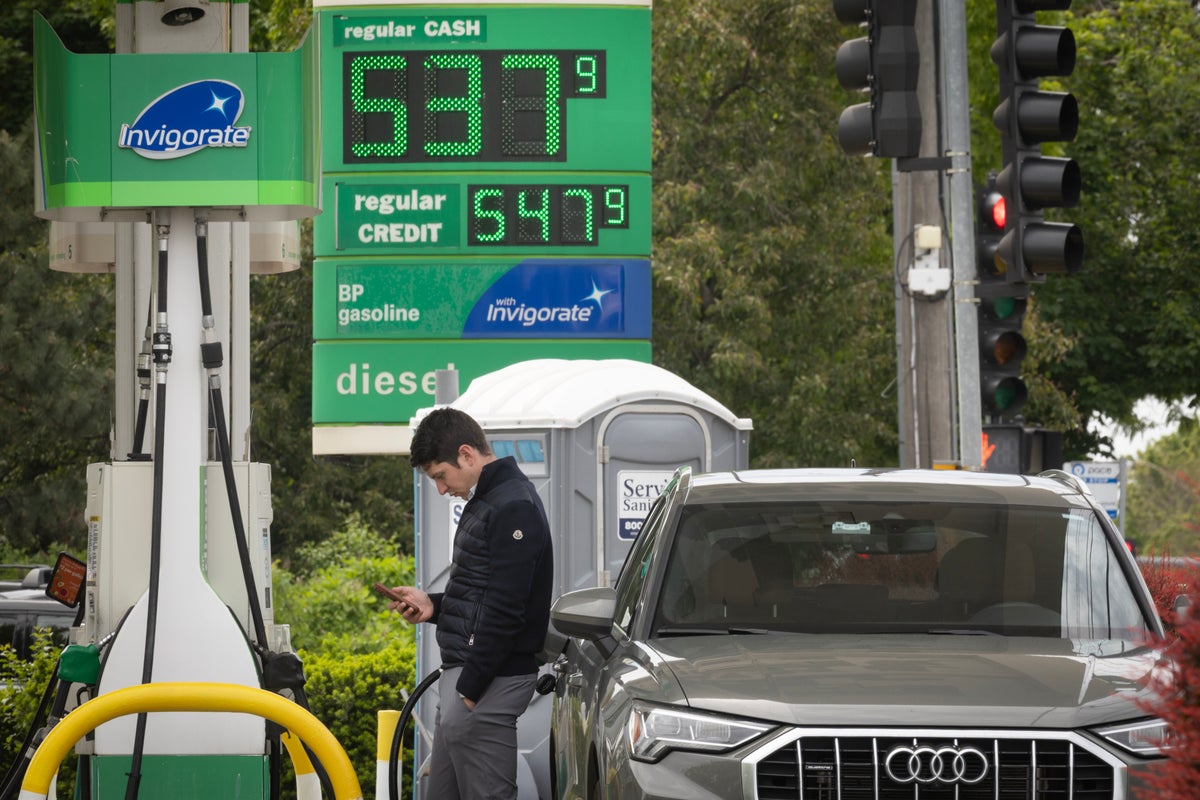
A Politico/Public First poll found 53% of Americans say they have struggled harder to make ends meet than at any other point in their lives, while 46% blame Trump for the economy. Price pressures remain broad: 79% said gas, 77% said food, and 62% said medicine are more expensive since Trump took office. The findings tie consumer affordability, inflation, and the Iran war-linked jump in gas prices to Trump’s political standing ahead of the midterms.
The market implication is less about headline inflation and more about political willingness to tolerate near-term pain in exchange for geopolitical goals. If consumers are already anchoring on affordability deterioration, energy is now a transmission mechanism into broader risk assets: higher fuel costs tend to depress discretionary spend first, then hit logistics-heavy retail and transportation margins with a lag of 1-2 quarters. That creates a subtle but important divergence where nominal revenue for select commodity-linked names rises while the rest of the consumption complex weakens.
The second-order effect is policy credibility. When households think leadership is dismissive of pocketbook pressure, inflation expectations become stickier even if the underlying shock is temporary, which makes rate-sensitive assets more vulnerable than the actual oil move would imply. In that regime, the market often overprices a persistent consumer slowdown and underprices the eventual normalization trade once conflict risk fades; the real opportunity is in timing the unwind, not the initial spike.
The politically sensitive part is gasoline, not crude, which means refining capacity, regional distribution, and crack spreads matter more than directionally bullish oil exposure. If crude spikes but product inventories remain tight, refiners can outperform for longer than upstream names, especially if end-demand weakens enough to cap crude upside while keeping margins elevated. Conversely, if authorities find a diplomatic off-ramp, the fastest mean reversion will likely be in retail fuel prices, leaving consumers relieved and energy equities vulnerable to a sharp multiple reset.
Consensus likely misses how uneven the damage is across sectors: staples, dollar stores, and low-end grocers can outperform as trade-down beneficiaries, while premium discretionary and freight-exposed names absorb the downside first. The bigger trade is not simply long energy/short everything else; it is long names with pricing power and short names whose margins are already fragile, because a modest fuel shock can create a disproportionate earnings revision cycle over the next two reporting seasons.
AI-powered research, real-time alerts, and portfolio analytics for institutional investors.
Request DemoOverall Sentiment
mildly negative
Sentiment Score
-0.35
