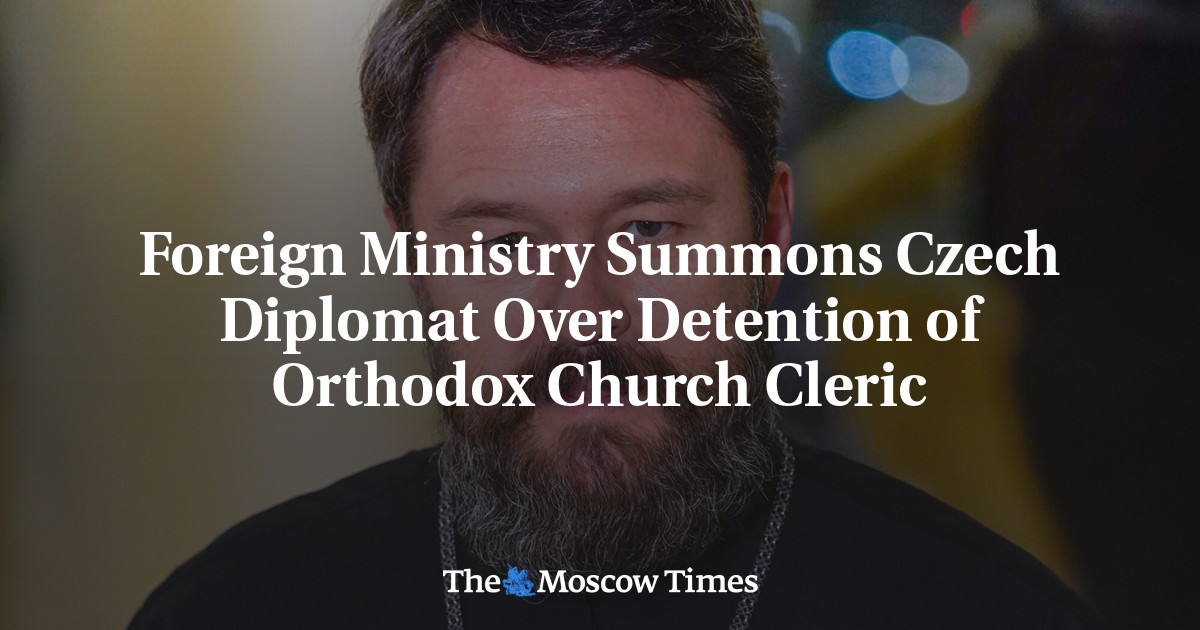
Russia’s Foreign Ministry summoned the Czech chargé d'affaires to protest the detention of Russian Orthodox cleric Metropolitan Hilarion, who was briefly held after Czech police found four containers of a white substance in his car. Hilarion and his driver have since been released and do not currently face charges, though laboratory testing confirmed the substance was illicit and the investigation continues. The case adds to already strained Russia-Czech tensions, but the direct market impact appears limited.
The immediate market read is not on the cleric himself but on the signaling value: this is another low-cost, high-visibility Russia–EU friction point that can be amplified domestically on both sides. For Czech assets, the base case is negligible direct economic damage, but the second-order effect is higher political noise around Russian-linked real estate, banking relationships, and travel flows in Central Europe, which keeps a mild risk premium embedded in regional sentiment-sensitive names.
The more important risk is jurisprudential rather than operational. If Czech authorities keep the case clean and evidence-based, the episode fades; if Moscow escalates diplomatically, the incident becomes a template for reciprocal harassment of foreign clergy, NGOs, and dual-use residents. That raises tail risk for any Russia-adjacent cross-border services businesses in the region, especially insurers, legal services, and hospitality operators with higher exposure to Russian clientele or assets.
Contrarianly, the market may be overestimating the probability of a meaningful sanctions-style spillover. Neither side wants a material economic escalation over an individual detention, so unless there is a charge sheet with politically sensitive evidence or a coercive Russian response, this is likely a 1-3 week headline cycle rather than a multi-month macro event. The better trade is to fade knee-jerk geopolitics in CZ-linked assets while staying alert for secondary retaliation aimed at soft targets rather than capital flows.
From a governance lens, the episode reinforces the reputational fragility of institutions operating in politically charged environments: clerical, educational, and cultural organizations with Russian ties in the EU may face more compliance scrutiny even absent any criminal finding. That creates asymmetric downside for small-cap regional hospitality and discretionary names if inbound Russian traffic or elite spending is curtailed, but the effect should be modest unless the story broadens beyond this single case.
AI-powered research, real-time alerts, and portfolio analytics for institutional investors.
Request DemoOverall Sentiment
mildly negative
Sentiment Score
-0.20
