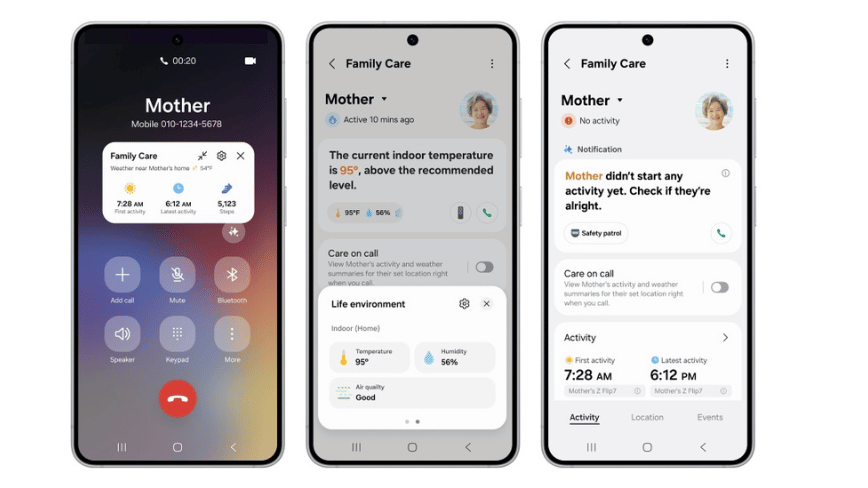
Samsung is rolling out new SmartThings family care features across its 500-million-user platform, including fall detection, cognitive decline screening, environmental safety alerts, and activity tracking for elderly relatives. The update also adds Galaxy AI routine creation, millimetre-wave ambient sensing with local processing, and Matter camera support, strengthening Samsung’s smart home and health-monitoring ecosystem. The move is strategically positive for Samsung, but near-term market impact is likely limited because pricing and subscription details were not disclosed.
Samsung is quietly turning the home-automation stack into an edge-compute health platform, and that matters more than any single feature. The strategic value is not the “care” branding; it is the accumulation of high-frequency behavioral data across appliances, wearables, and cameras that competitors with speaker-centric ecosystems cannot easily replicate. If this works, Samsung’s moat expands from device sales into a recurring software/service layer with materially higher switching costs, especially in households that standardize on its white goods.
The second-order effect is pressure on the broader smart-home market to justify privacy architecture, because the winning model here is likely local inference with selective disclosure, not cloud-first monitoring. That favors hardware vendors with edge silicon, on-device AI, and an installed base of heterogeneous sensors. It is also a quiet challenge to Apple, Google, and Amazon: they may have stronger software brands, but they lack Samsung’s dense appliance footprint, which is exactly what makes passive care detection commercially viable.
The key risk is not adoption; it is liability. False positives in cognitive decline or fall detection create reputational and potentially regulatory blowback, and the product will likely face a long tail of consent and elder-abuse criticism once real families use it. Expect a 6-12 month lag before meaningful revenue contribution, while the market overweights near-term launch optics. The better read is that Samsung is building a platform with optionality for subscriptions, insurance partnerships, and senior-care services over 2-3 years, but the path there depends on proving accuracy and keeping data processing visibly local.
Contrarian view: this may be underappreciated as a healthcare distribution channel rather than a consumer-tech feature. The winner may ultimately be whichever platform can translate passive home data into insurer- or provider-accepted signals; if Samsung gets there first, the upside is larger than the current market is likely modeling, but so is the regulatory surface area.
AI-powered research, real-time alerts, and portfolio analytics for institutional investors.
Request DemoOverall Sentiment
mildly positive
Sentiment Score
0.25
Ticker Sentiment
