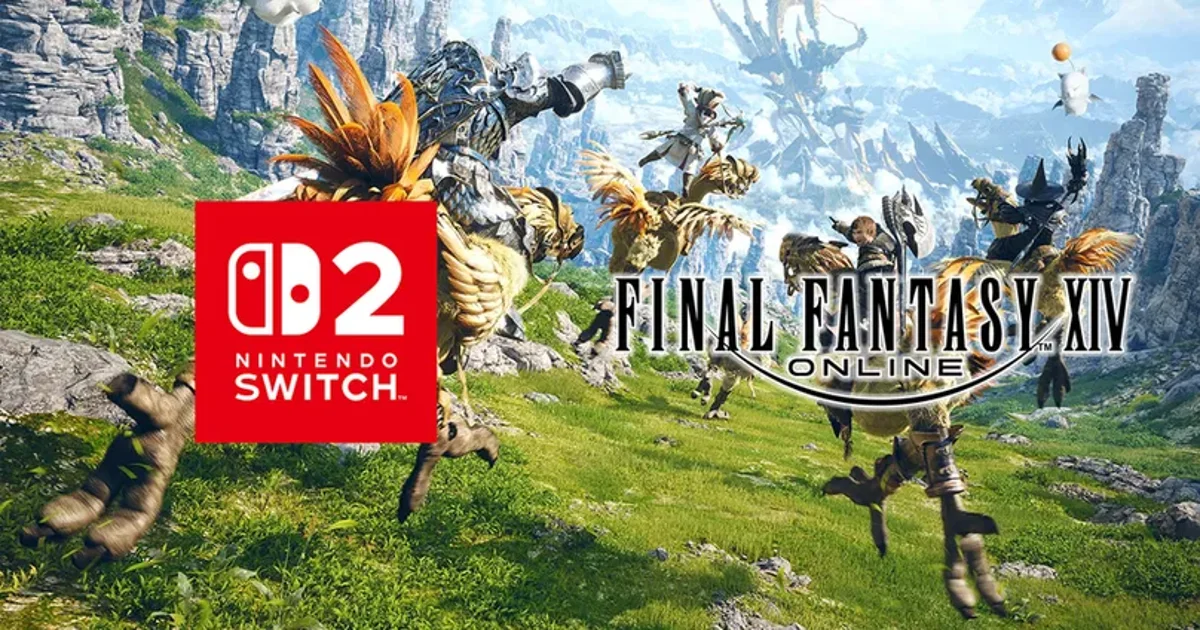
Final Fantasy 14 will launch on Nintendo Switch 2 in August 2026, expanding the game's platform reach to a new console audience. However, the Switch 2 edition will require a separate subscription on top of existing PC or console fees, though it will not require Nintendo Switch Online. The pricing details for the new subscription and the exact release date remain unclear.
This is a distribution win for Square Enix, but the bigger signal is that Nintendo is willing to tolerate a more friction-heavy monetization model on a marquee third-party title to deepen Switch 2’s software depth. That suggests the platform is prioritizing content breadth over a “one account, one fee” consumer experience, which can help fill the launch calendar but raises the probability of subscription fatigue as the ecosystem matures.
The second-order effect is on engagement quality, not just unit sales. MMORPGs are unusually sensitive to convenience and churn at the margin, so adding a separate recurring fee will likely cap conversion among lapsed or casual users while preserving the core whales who already pay and are most likely to value portability. In practice, this makes the Switch 2 version more of a retention product than an acquisition engine, with upside concentrated in incremental playtime and low-intensity sessions rather than meaningful subscriber expansion.
For competitors, the message is that premium live-service IP can be segmented by hardware without destroying demand, which may embolden other publishers to test platform-specific pricing or bundles. But the risk is that players normalize waiting for discounts or passing on secondary-platform access entirely, which could flatten the attach-rate lift Nintendo wants from third-party hits over the next 6-12 months. The muted reaction also hints this is not a mass-market catalyst for the franchise; it is more likely a slow-burn revenue tail than an immediate re-rating event.
The contrarian read is that the market is underestimating how sticky this can be for a small but monetizable slice of the installed base. If Square Enix can convert even a modest fraction of active subscribers into dual-platform users, this becomes a high-margin incremental stream with little development risk, while Nintendo benefits from demonstrating that Switch 2 can host complex online titles without needing to subsidize network access. The key is whether the subscription premium is low enough to feel optional; if it is, the downside is limited and the launch could quietly outperform expectations on engagement.
AI-powered research, real-time alerts, and portfolio analytics for institutional investors.
Request DemoOverall Sentiment
mildly positive
Sentiment Score
0.15
