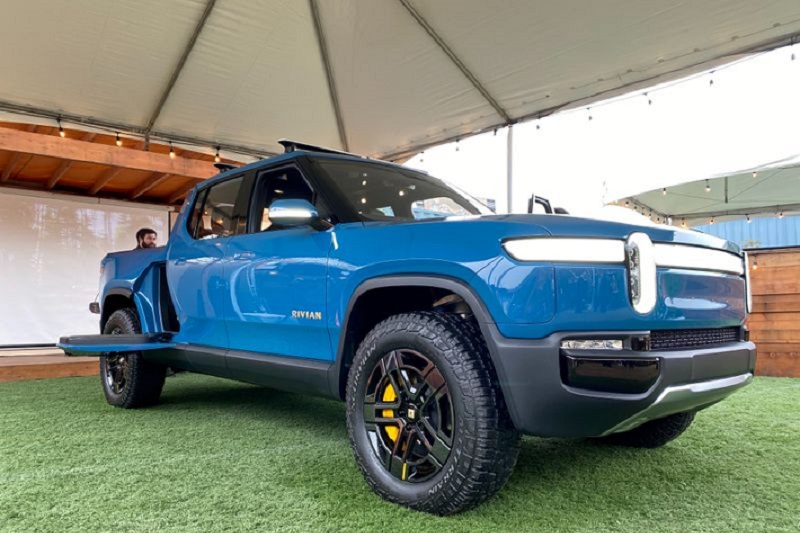
Needham kept a Buy rating on Rivian with a $23 price target, citing progress as R2 production shifts from development to manufacturing and customer deliveries approach. Rivian also beat Q1 2026 expectations with EPS of -$0.33 versus -$0.63 expected and revenue of $1.38 billion, while deliveries rose 6% quarter-over-quarter to about 10,400 units. Management reiterated 2026 delivery guidance of 64,500 units and expanded Georgia Phase 1 capacity to roughly 300,000 units, though EV demand remains soft.
This is less a fundamental re-rating than a financing window for execution. The market is being asked to underwrite a multi-year ramp before the evidence base exists, so the stock should continue to trade primarily on milestone credibility rather than near-term unit economics. That creates a classic path for upside if conversion trends improve, but also a fragile setup where any slip in deliveries, reservations, or production learning curves can compress the multiple quickly.
The second-order winner is the supplier ecosystem tied to ramping a new platform and facility buildout: tooling, automation, logistics, and battery/thermal content should see order visibility improve before Rivian’s own margin profile does. The loser set is incumbent EV OEMs and low-volume premium manufacturers that rely on a relatively affluent customer cohort—if the new product lands, it can pull share from the same discretionary buyer pool without requiring category expansion. Importantly, expanding capacity now effectively moves the debate from demand to execution, which raises the bar but also makes surprises more asymmetric.
Consensus appears to be underestimating how little room there is for operational slippage once the market starts capitalizing the 2027 ramp. The soft EV backdrop means any evidence of stronger-than-expected conversion could drive a sharp reflexive move higher, but the inverse is more powerful because the current valuation still embeds a credible ramp without full proof. The most interesting contrarian angle is that the stock may be less about vehicle demand and more about whether software/services and manufacturing leverage can create a path to acceptable gross margin even if the broader EV market remains subdued.
Catalyst timing matters: next 1-2 quarters are about order quality and delivery cadence; the next 6-12 months are about whether the plant expansion and R2 launch reduce skepticism enough to support a higher mid-cycle EV/EBITDA multiple. Failure modes are straightforward: weak conversion, lower-than-expected utilization, or any sign the capacity add is chasing demand rather than validating it. That would shift the setup from optionality to capital intensity and likely re-rate the stock toward hard-asset skepticism.
AI-powered research, real-time alerts, and portfolio analytics for institutional investors.
Request DemoOverall Sentiment
mildly positive
Sentiment Score
0.28
Ticker Sentiment
