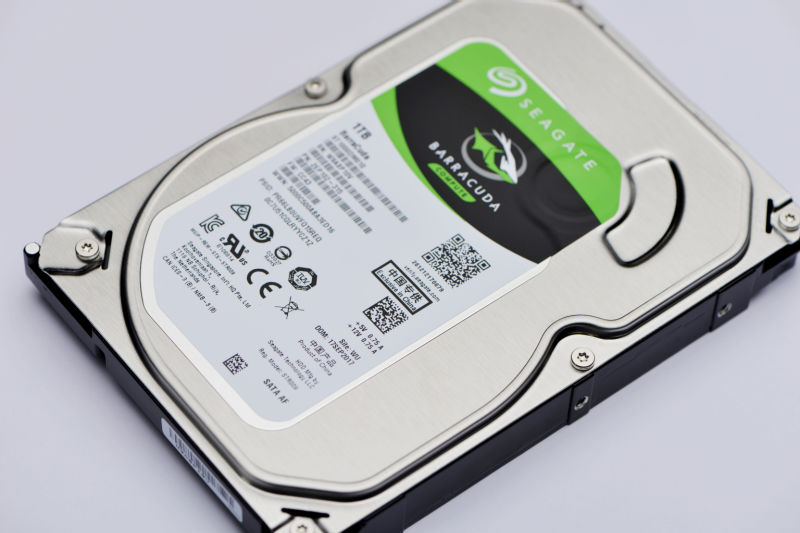
During TD Cowen’s 53rd Annual Technology, Media & Telecom Conference, Seagate's CFO John Luca Romano outlined the company's strategic advancements, including its HAMR technology, which is expected to account for 40% of nearline exabyte sales in the next year and 70% within two years. Seagate is nearing its $5 billion debt reduction target and plans to restart share buybacks, supported by strong demand driven by AI and a disciplined approach to capital expenditure, with sequential revenue growth anticipated throughout 2025 and a gross margin target of 40% in the coming quarters.
Seagate Technology (STX) presented a strongly positive outlook at TD Cowen’s conference, driven by its strategic transition to Heat-Assisted Magnetic Recording (HAMR) technology, which is projected to constitute 40% of nearline exabytes sold within the next fiscal year and 70% within two years. This shift is crucial for achieving robust exabyte growth primarily through higher capacity drives rather than increased unit production, a strategy supported by HAMR qualification with three major cloud service providers and anticipated full adoption by large cloud customers within twelve months. Financially, Seagate is close to its $5 billion debt reduction target, enabling the planned resumption of share buybacks, and projects sequential revenue growth throughout 2025. The company is targeting a 40% gross margin in upcoming quarters, with a 50% incremental margin at $2.6 billion in revenue, aiming to improve its current margin position relative to competitors as HAMR adoption accelerates. Management views the current demand cycle as sustainable, citing industry consolidation, disciplined capital expenditure (4-6% of revenue), demand outstripping supply, and build-to-order processes providing enhanced visibility and ability to manage cyclicality. AI is a significant tailwind, boosting demand for data retention and poised to drive further growth through AI-generated data, while enterprise demand for hard drives is expected to remain stable. Inventory levels are healthy, with customers absorbing higher prices for available volume, and the VIA market in China shows early signs of recovery.
AI-powered research, real-time alerts, and portfolio analytics for institutional investors.
Overall Sentiment
strongly positive
Sentiment Score
0.80
Ticker Sentiment
