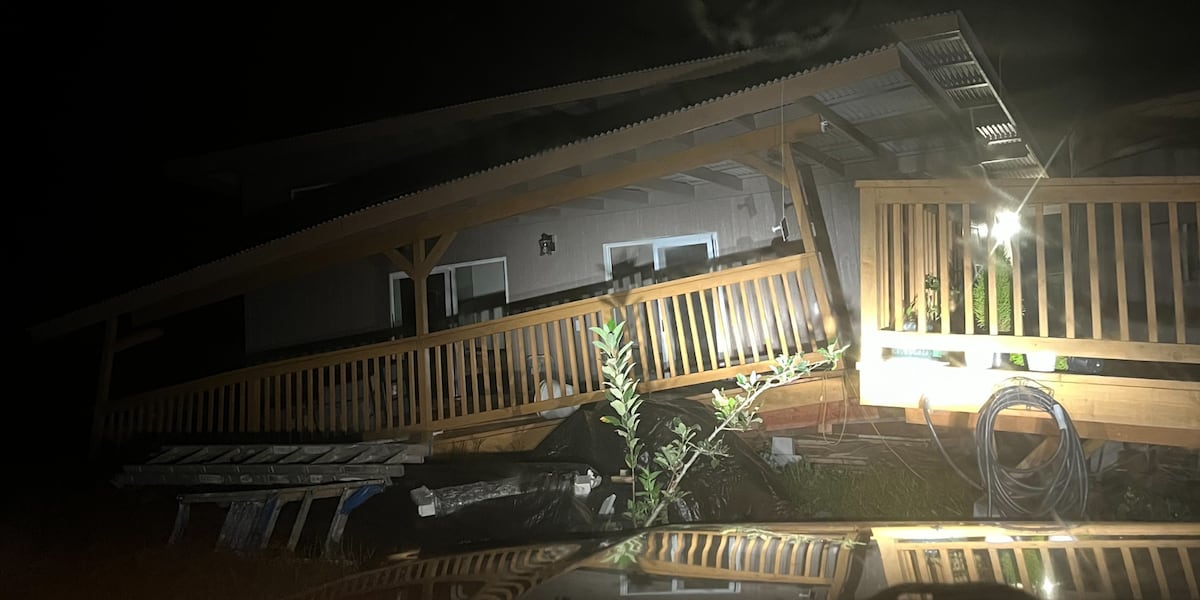
A magnitude 6.0 earthquake near Honaunau caused damage, rockslides, and outages across parts of South Kona, briefly cutting power to about 1,000 Hawaiian Electric customers and leaving around 70 still without service by Saturday morning. Multiple roads were closed overnight but had reopened by morning, and at least one family required Red Cross assistance after a home shifted off its foundation. Officials said the quake was not linked to Mauna Loa or Kilauea volcanic activity.
The immediate market impact is less about the quake itself and more about the response burden it creates for island infrastructure. Short-duration disruptions to power, roads, and water tend to favor repair-oriented contractors, utility hardening vendors, and emergency logistics providers, while simultaneously creating a small but real near-term drag on local retail, hospitality, and construction schedules. Because the roads reopened quickly and outages were mostly restored within hours, this looks like an operational shakeout rather than a multi-week regional impairment.
The second-order risk is from latent damage discovery over the next 1-3 weeks. That is when insurance claims, hidden structural issues, and water-line failures tend to surface, which can convert a one-night event into a higher-frequency maintenance cycle for utilities and municipalities. The biggest negative spillover is not in Hawaii-specific assets, which are limited, but in any company with concentrated island exposure or dependent on just-in-time last-mile delivery; even brief infrastructure interruptions can force inventory write-downs, labor inefficiency, and service delays.
The contrarian angle is that the market will likely underprice the resilience trade. A magnitude-6 event with limited persistent outages often proves supportive for companies tied to grid repair, backup generation, communications redundancy, and disaster response, especially if local authorities push for elevated resilience spending. If aftershock activity remains muted, the event should fade quickly as a macro trade, but if inspectors uncover widespread foundation or utility damage, the situation can shift from a one-day disruption into a months-long rebuild cycle.
AI-powered research, real-time alerts, and portfolio analytics for institutional investors.
Request DemoOverall Sentiment
mildly negative
Sentiment Score
-0.25
