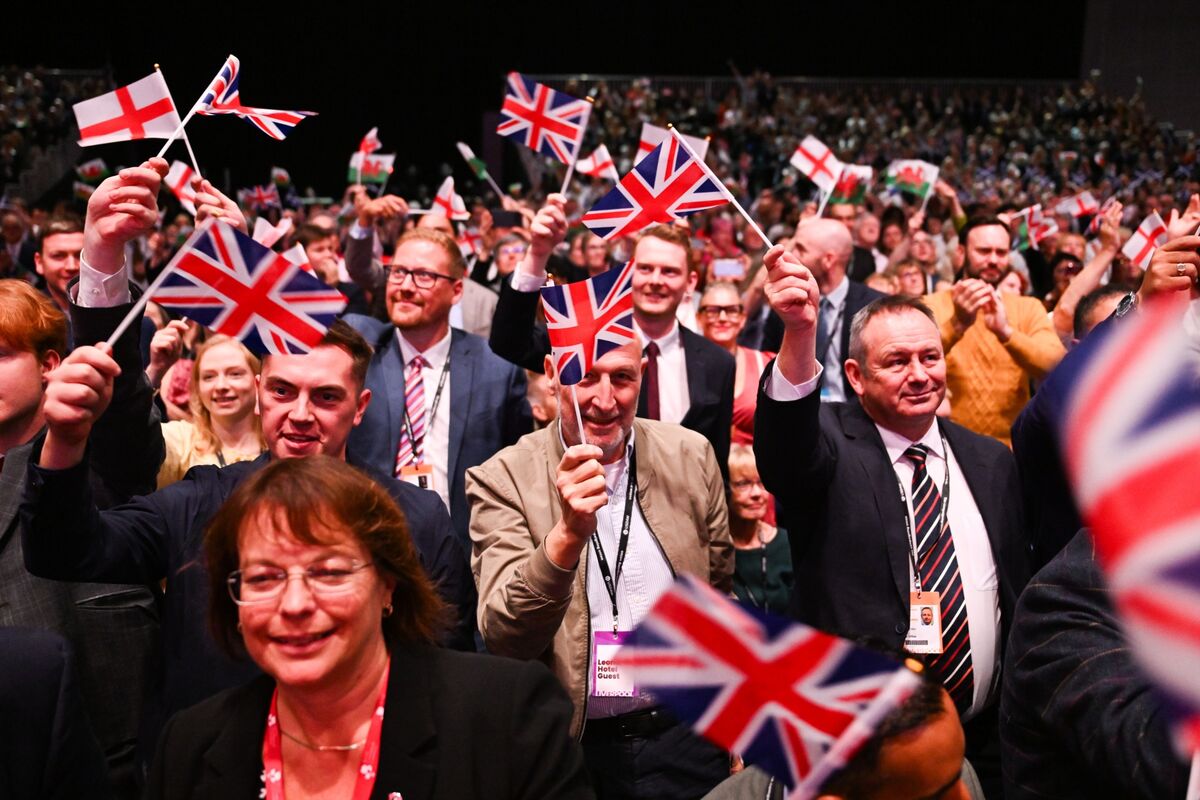
At the UK Labour Party conference, leader Keir Starmer notably attacked Reform UK leader Nigel Farage, underscoring Farage's unexpected influence on the national political discourse. This unusual focus on a newer party suggests a significant challenge to Labour's traditional identity as the representative of working people, indicating potential shifts in the UK's political landscape and voter sentiment that institutional investors should monitor.
The UK Labour Party conference has revealed a significant shift in the country's political dynamics, underscored by leader Keir Starmer's decision to directly attack Nigel Farage of Reform UK. This move is highly unusual and signals that a newer populist party is exerting substantial influence, effectively 'dictating the terms' of the political contest. The core of the issue is a struggle for Labour's 125-year-old identity as the 'true representative of the working people,' suggesting its traditional voter base may be fracturing. While the immediate market impact is registered as neutral, this fragmentation introduces a notable degree of unpredictability into the UK's future policy environment. The contest for this key demographic could lead to unexpected shifts in economic, trade, and labor policies as the established parties react to the populist challenge.
AI-powered research, real-time alerts, and portfolio analytics for institutional investors.
Request DemoOverall Sentiment
neutral
Sentiment Score
0.00
