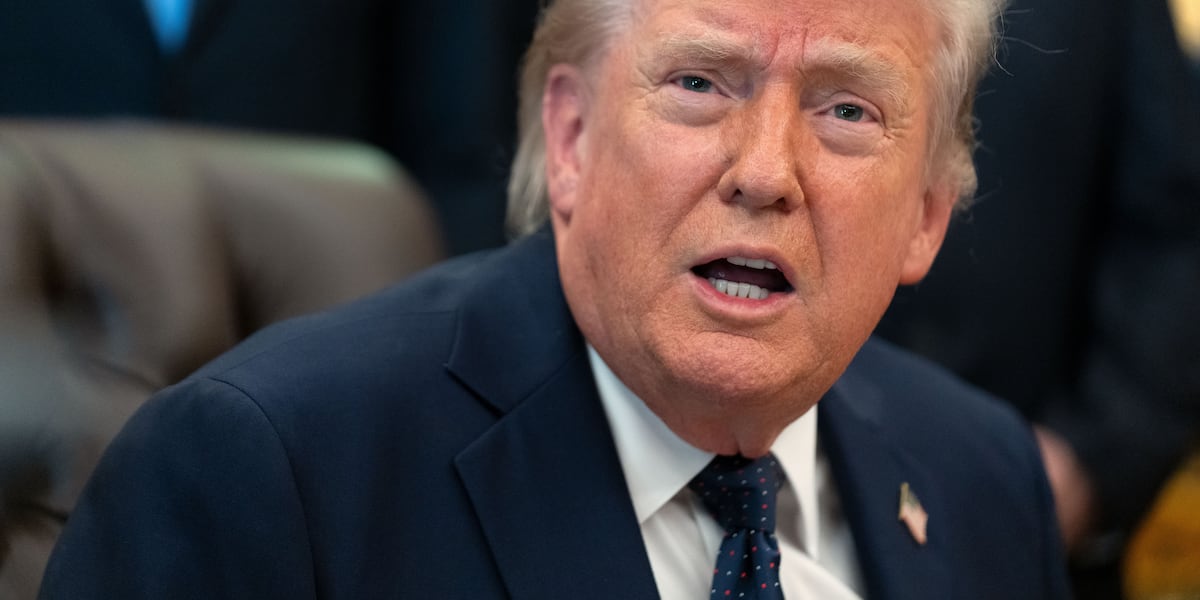
The Trump administration says the Iran war has been 'terminated' because the April 7 ceasefire paused hostilities, a reading meant to avoid the 60-day congressional authorization deadline under the War Powers Resolution. The dispute is centered on war powers and could affect U.S. military policy and Middle East risk, while the Strait of Hormuz blockade keeps energy-market tensions elevated. Lawmakers from both parties are pressing for formal approval, making the legal and political backdrop highly contested.
The market implication is less about the legal theory and more about how it extends the premium on a constrained energy corridor. As long as the Strait remains effectively bottlenecked, shipping insurance, tanker utilization, and prompt physical differentials should stay bid even if headline fighting is paused. That creates a persistent volatility regime where prompt crude and refined products can reprice faster than the broad energy equity complex, especially if the market initially assumes a quick normalization that never fully arrives.
The second-order winner is not just upstream producers, but anyone with exposure to maritime security, naval logistics, and defense procurement tied to force protection and missile/drone interception. A “new operation” framing effectively resets the political clock and could keep emergency spending flowing without the clean Congressional authorization that would otherwise force a binary vote. That supports defense primes with short-cycle demand while also reducing the odds of a near-term de-escalation discount in the oil curve.
The biggest risk is a policy-induced gap move rather than an orderly trend: if Congress forces a vote or a stray kinetic event reactivates hostilities, positioning that is short volatility in crude or underweight defense can get squeezed hard within days. Over the next 1–3 months, the key variable is whether the market believes the ceasefire is durable enough to unlock tanker passage; if not, the current “paused war” interpretation becomes a mechanism for indefinite market tightness rather than a temporary truce.
Contrarian read: consensus may be underestimating how much of the geopolitical risk premium can be monetized without a full-scale escalation. If the administration can preserve the appearance of de-escalation while keeping maritime restrictions in place, energy prices may stay elevated but not chaotic, which is the ideal setup for integrated oils and defense names. That argues for staying long the beneficiaries of sustained friction rather than chasing a pure spike trade.
AI-powered research, real-time alerts, and portfolio analytics for institutional investors.
Request DemoOverall Sentiment
mildly negative
Sentiment Score
-0.20
