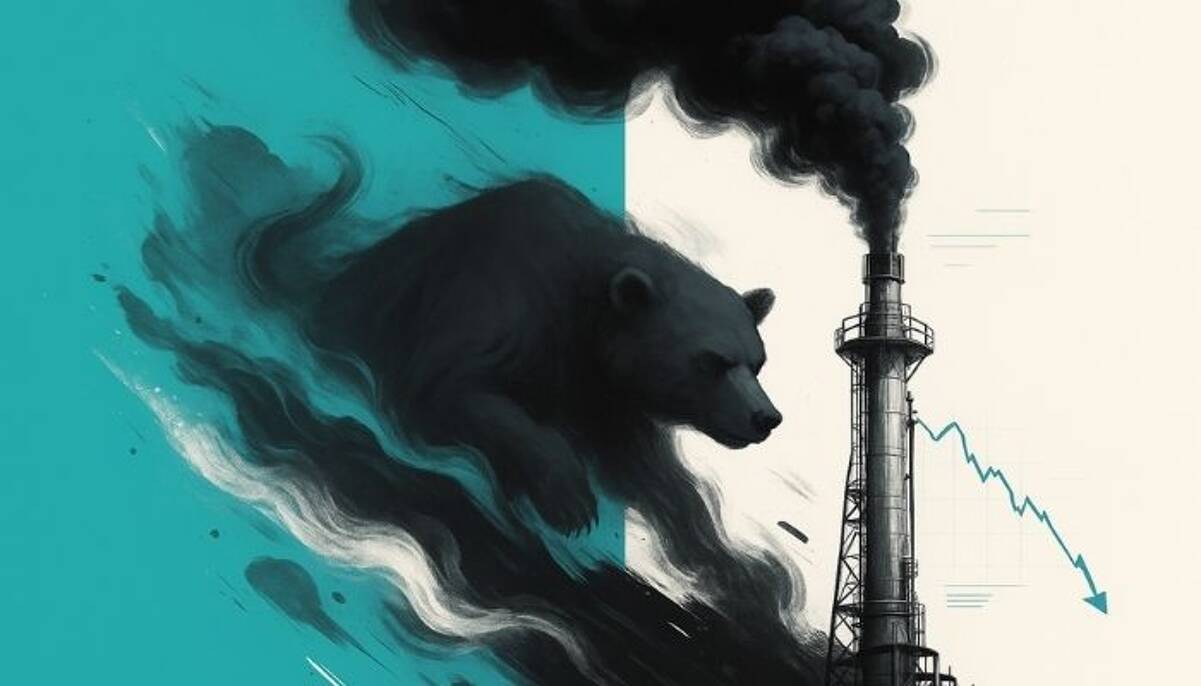
Oil looks pressured as weakening global demand offsets Middle East supply volatility: crude inventories rose for the first time in six months to the highest level since January, while OPEC cut 2026 demand growth by 580,000 bpd. IEA is more bearish, projecting 1.6 million bpd deeper global demand destruction and a further 4.3 million bpd decline in 2026 oil shipments, though Hormuz disruptions (only five non-container ships passing this week) add a geopolitical supply premium. For natural gas, EIA expects record 111.2 Bcf/d dry gas production in 2026 and 17.4 Bcf/d LNG exports with ample U.S. storage cushion, while price action is bearish with the pair trading near $2.73 and below key EMAs (50 EMA ~ $2.75).
The cleanest expression here is not a directional commodity bet but a relative one: U.S. gas producers and oil beta are vulnerable to a slower price tape, while infrastructure and compression names should hold up better if molecule throughput stays high. For NGS, the key is that its earnings sensitivity is more tied to utilization, backlog, and customer activity than to spot Henry Hub, so it can outperform even in a weak gas tape if LNG-linked volumes stay resilient. The catch is that if producers respond to sub-$2.80 gas by cutting capex, the impact on service intensity usually shows up with a lag of 1-2 quarters.
Near term, the market is likely to overtrade technical levels and underweight the fundamental asymmetry between domestic storage and export-linked demand. A break below $2.68 in gas would probably accelerate systematic selling and hit the entire gas complex, but that is more bearish for levered E&Ps than for NGS. Over 1-3 months, the real catalyst is whether LNG feedgas and Qatar displacement tighten balances enough to offset the inventory build; if not, the 2026 production outlook becomes a capex-cut story rather than a volume-growth story.
The contrarian risk is that consensus is reading the tape as purely bearish when the marginal price setter is increasingly global. If geopolitical disruptions persist, LNG cargo rerouting can lift realizations and reopen the upside in gas even without a weather shock. On oil, the risk premium can evaporate quickly if Strait-of-Hormuz rhetoric does not convert into physical disruption, which would compress energy equity multiples faster than commodity prices alone imply.
AI-powered research, real-time alerts, and portfolio analytics for institutional investors.
Request DemoOverall Sentiment
mildly negative
Sentiment Score
-0.35
Ticker Sentiment
