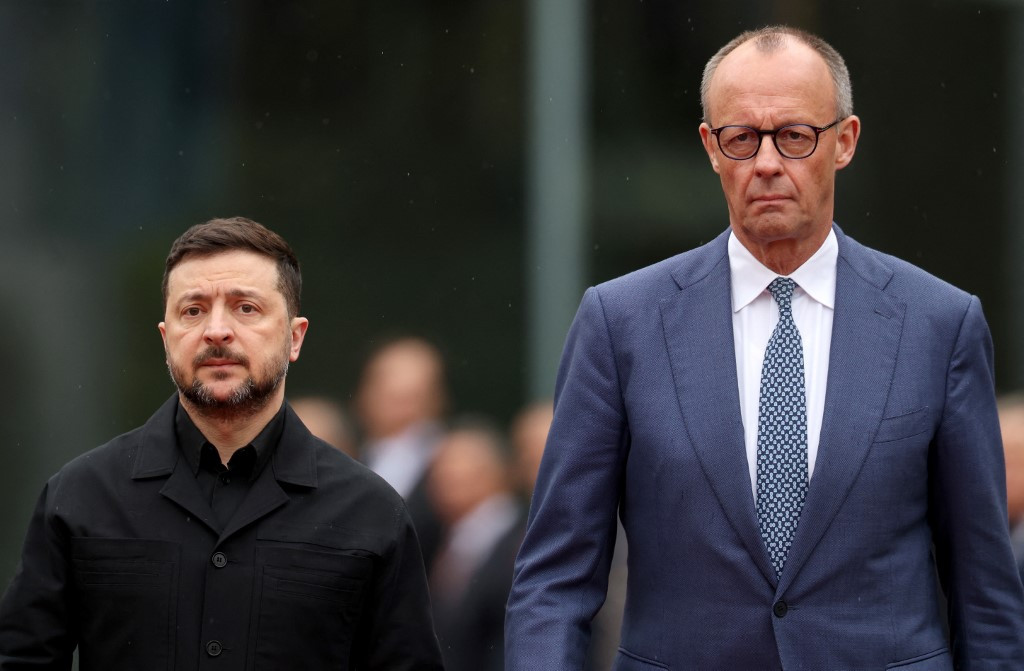
German Chancellor Friedrich Merz said Ukraine's closer integration into the EU could be a key condition for ending Russia's war, and floated territorial concessions as part of any future peace deal. He urged the EU to take credible, irreversible steps toward Ukraine's full membership, including interim participation in EU institutions without voting rights. The article is primarily geopolitical and policy-focused, with limited immediate market impact beyond defense and European political sentiment.
This is less about a near-term peace deal than about Europe trying to pre-price the postwar settlement architecture. The investable second-order effect is that “EU path” language becomes a bargaining chip that reduces the probability of a clean ceasefire and increases the odds of a long, managed conflict with intermittent de-escalation windows; that tends to support defense spending commitments, border-security buildout, and reconstruction-capex optionality more than it supports broad risk-on in Eastern Europe.
The more important market implication is that if Europe is serious about making membership conditional, it will have to fund and institutionalize Ukraine earlier, which pressures already-fragmented EU fiscal politics. That raises dispersion: beneficiaries are prime defense contractors, engineering firms tied to grid, transport, and demining rebuild, while losers are sectors sensitive to higher sovereign issuance and delayed normalization in Central/Eastern Europe. The vote-rights bridge idea also signals a template for “quasi-membership,” which can be replicated for other candidates; that increases bureaucratic demand but does not materially lower tail risk for security assets.
Consensus is likely overestimating how quickly any diplomatic framing translates into tradeable macro relief. Even if talks advance, the referendum/territorial-concession framework creates a non-linear downside risk: a domestic rejection in Ukraine would force renewed escalation and could delay reconstruction capital by 6-12 months. The cleaner trading thesis is not peace optimism; it is a longer-duration European defense and infrastructure spend cycle, with intermittent headline volatility around negotiation milestones.
The contrarian angle is that the market may be underpricing the political cost to EU leaders of appearing to offer “symbolic” integration without hard security guarantees. If that narrative hardens, it can actually accelerate military procurement and border-industrial spending because governments need visible commitments they control directly. In that scenario, defense equities may outperform broader Europe even if headline war-risk premium compresses.
AI-powered research, real-time alerts, and portfolio analytics for institutional investors.
Request DemoOverall Sentiment
neutral
Sentiment Score
0.05
