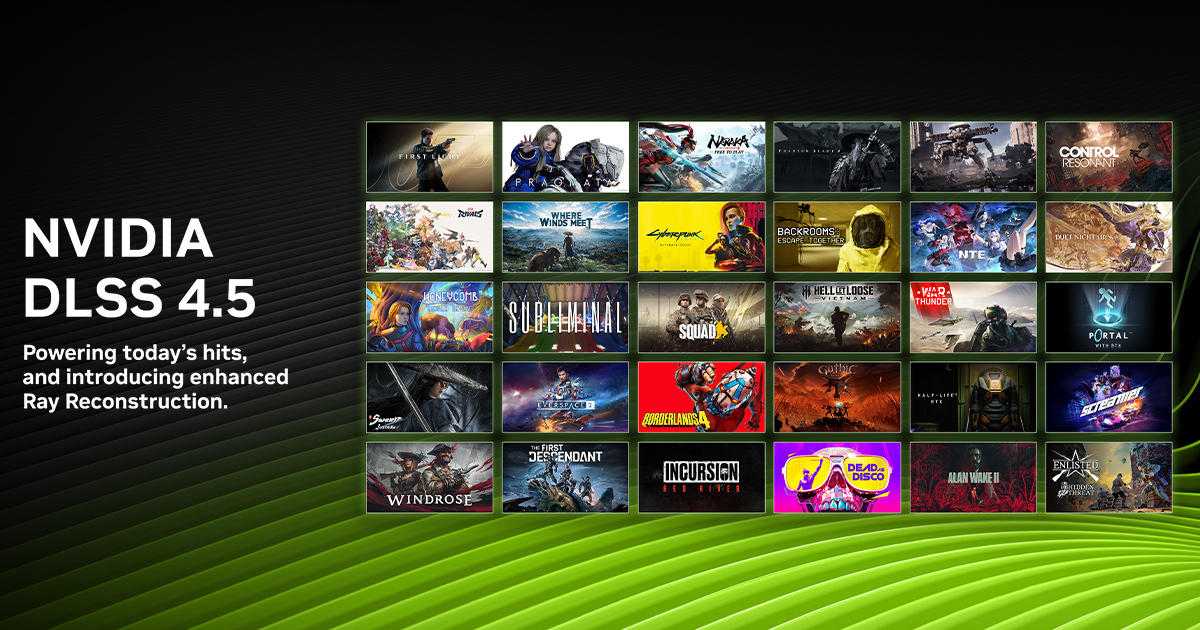
NVIDIA is rolling out DLSS 4.5 Ray Reconstruction in August, adding a 2nd-generation transformer model designed to improve image quality in ray-traced and path-traced games. The update expands RTX-enhanced capabilities across 27 games and is also coming to Blender Cycles with Blender 5.3 this fall, reinforcing NVIDIA’s AI graphics lead. Several upcoming titles, including Marvel Rivals, CINDER CITY, Gothic 1 Remake, Hell Let Loose: Vietnam, Honeycomb: The World Beyond, and Squad, are set to receive DLSS 4.5 upgrades or native support.
This is less a one-off product note than a reinforcement of NVIDIA’s moat: the company is steadily turning RTX from a GPU feature set into a software standard that raises the switching cost for both gamers and studios. The important second-order effect is that each incremental DLSS/RTX improvement expands the addressable use case for premium hardware without requiring a new architectural breakthrough, which helps defend mix even if unit growth moderates. The cadence of launch support across titles also suggests NVIDIA is using game releases as a distribution channel for its software stack, not just a feature benefit.
The more interesting competitive implication is not inside gaming, but in adjacent creator workflows. If real-time denoising/viewport interactivity becomes materially better, that can push more production iteration onto NVIDIA-enabled systems and away from generic CPU workflows or competing accelerator stacks, especially in small studios that care about cycle time more than peak render quality. That creates a slow-burn adoption flywheel: better tools drive more RTX-native content, which in turn increases the perceived need for RTX-class hardware in both consumer and pro-sumer ecosystems.
The main risk is that investor expectations may already embed "RTX as inevitable," leaving near-term upside tied to demonstrated attach rates rather than announcement volume. In the next 1-2 quarters, the market will care more about whether these features translate into higher GPU ASPs, better GeForce mix, or incremental platform engagement; if not, this reads as ecosystem maintenance rather than a new demand inflection. Watch for any sign that console/AMD/Intel marketing shifts toward "good enough" AI upscaling at lower price points, which could cap the premium narrative over 6-12 months.
Contrarian view: the bullish case may be underestimating how much of the value is accruing to software enablement rather than silicon alone. If DLSS continues to improve without requiring the latest flagship cards, it could actually widen the installed base and deepen lock-in while blunting the need to upgrade every cycle — a subtle negative for unit replacement, but positive for platform power and long-duration monetization.
AI-powered research, real-time alerts, and portfolio analytics for institutional investors.
Request DemoOverall Sentiment
moderately positive
Sentiment Score
0.62
Ticker Sentiment
