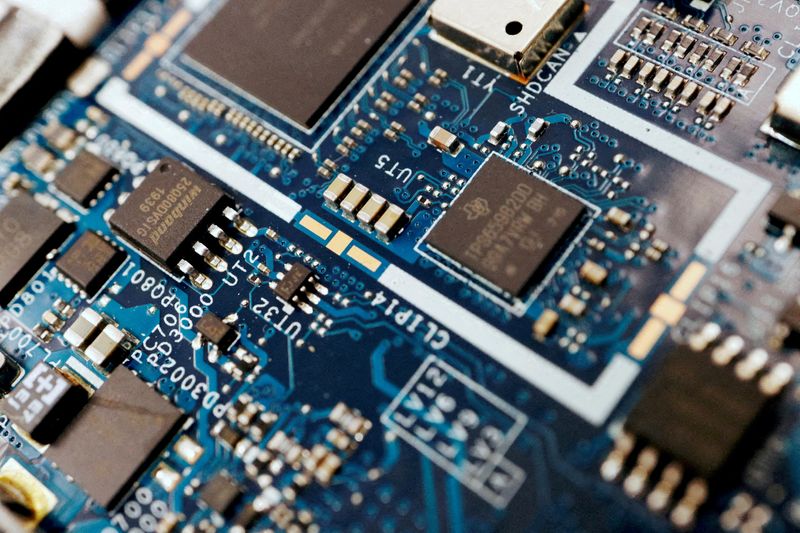
Semiconductor stocks have added about $3.8 trillion in market value over the past six weeks, driven by surging AI-related demand for CPUs and memory chips. Intel is up 239% this year, Sandisk 558%, and Micron is projected to generate $77 billion in operating profit, with shares still trading at 8.9x forward earnings. The article suggests the rally is supported by real earnings growth and supply constraints, though some veteran investors warn the move has become increasingly vertical and speculative.
This is less a broad “AI trade” than a capacity-cycle trade masquerading as a growth story. The second-order winner is the memory and foundry ecosystem, where pricing power can stay elevated long after the market stops rewarding the headline names; the real tell is that the bottleneck is shifting from algorithm demand to physical wafers, packaging, and HBM-like constraints. That argues the strongest earnings upgrades should still be ahead for the supply-constrained suppliers, while downstream hyperscalers absorb the cost inflation with a lag.
The setup is also increasingly self-reinforcing: as AI workloads move from training to always-on inference, utilization becomes the key variable, which tightens the demand profile and reduces the odds of a quick demand reset. But the trade is vulnerable to a classic cycle break if capex announcements overshoot actual deployment, because supply response in semis tends to arrive with a 9-18 month lag and then hits margins abruptly. In other words, the next leg is likely still up, but the duration of the move is more fragile than the price action implies.
Consensus seems to be underestimating how much of the upside is already embedded in the most obvious beneficiaries while overlooking the indirect losers. The better contrarian expression is not to fade semis outright, but to short the beneficiaries with the weakest operating leverage to the cycle and the most stretched positioning, while staying long the scarce-capacity names with visible pricing power. That favors relative-value structures over naked directional longs at this stage, especially after a multi-week vertical move.
Goldman/IBKR-related sentiment cuts both ways: active trading volume and options activity likely remain elevated, which supports momentum near term, but it also means the tape can unwind quickly on any guide-down from a marquee capex buyer or a single supply normalization headline. Over the next 1-3 months, the key risk is not demand disappearance; it is expectations peaking faster than reported earnings revisions can catch up.
AI-powered research, real-time alerts, and portfolio analytics for institutional investors.
Request DemoOverall Sentiment
moderately positive
Sentiment Score
0.62
Ticker Sentiment
